Art prints online with an eye for quality
A room changes character when art not only fills an empty wall but adds calm, rhythm, and presence. That's why art prints online have become a more interesting field than quick purchases and generic motifs. For the quality-conscious buyer, it's not just about the image itself, but about materiality, depth, surface, format, and the artistic intention behind it.
Buying art online requires a more precise eye than many expect. The screen blurs differences. Exclusive cotton paper and cheap reproductions can look alike for a few seconds. But the difference is immediately felt when the work hangs in a room and has to live with light, distance, and daily attention.
When art prints become part of a room's identity
There is a significant difference between decorative posters and actual fine art prints. Both can be visually strong, but they are created with different intentions. A poster is often designed for immediate impact. A fine art print is created for longevity — in mood, materiality, and experience.
The most successful art prints are immediately appealing, but they continue to unfold. One discovers the balance in the composition, the calm in the colors, the tension between the graphic and the organic. It is precisely there that the difference between mass-produced wall decoration and works with genuine presence arises.
When choosing art prints online, it is therefore worth asking whether the work merely fills a surface — or adds character, depth, and rhythm to the room.
Materials, depth, and visual integrity
The motif is often the first thing one reacts to. But a strong work is carried by more layers than the immediate visual expression.
The paper is one of them. A heavy, acid-free fine art paper with a soft texture and high color stability creates a significantly different experience than thin standard sheets. The surface affects both the depth of the color and the way light moves across the work. Some compositions require an almost velvety matte finish. Others live through a more vibrant texture, where details stand out more sharply.
The printing technique plays an equally decisive role. Giclée printing has become a hallmark of quality because the technique — when executed correctly — adds a special precision in tone, nuances, and durability to the work. Especially in poetic compositions, archive-based motifs, and collages with fine transitions, the difference becomes evident. Here, the technique is not just production, but part of the work's integrity.
Editions also say something about the work's character. A numbered and signed edition adds proximity to the artist's process and a more sensory feeling of the work's singularity. Not as prestige, but as a connection between object and origin.
The sensory significance of finish
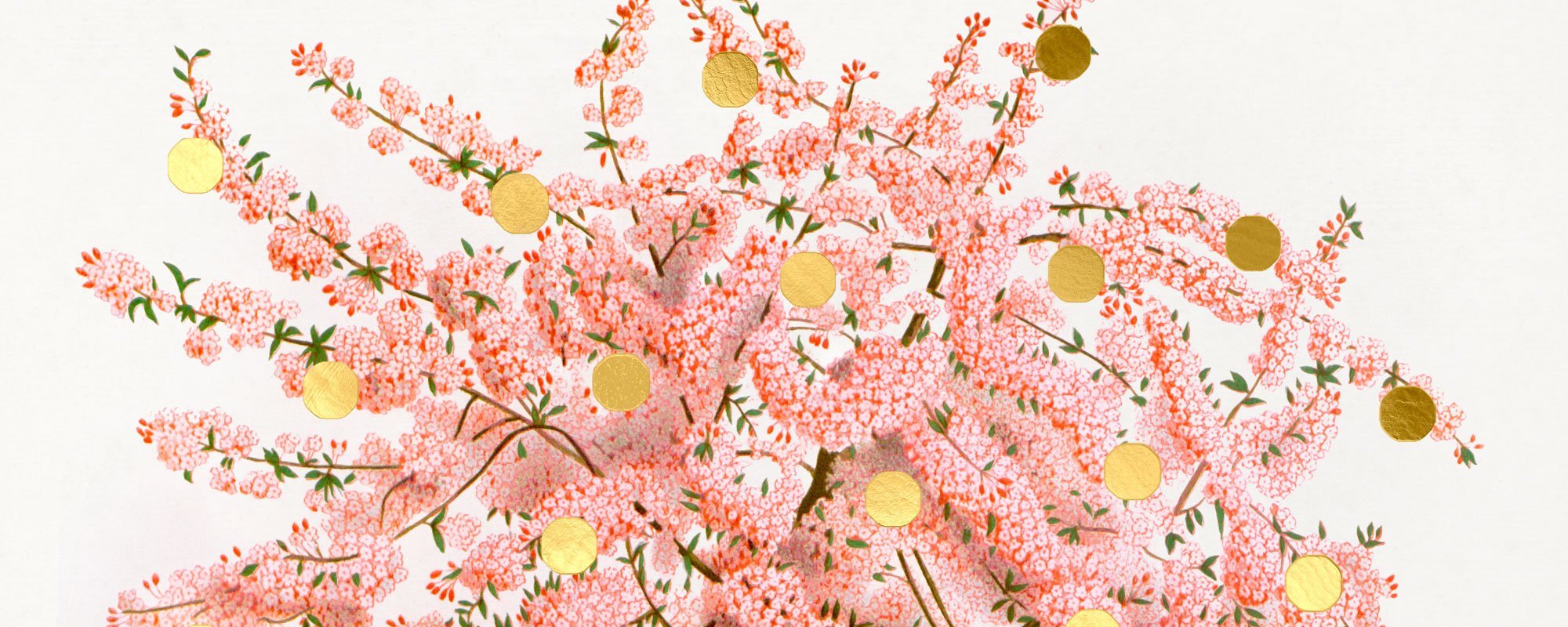
It is often the finish that determines whether a work feels ordinary or complete. Hand-finished details such as gold leaf, subtle texture layers, or manual post-processing change the work's presence in the room.
These types of details are rarely fully experienced on a product page. In contrast, they are physically felt. The light catches the surface differently throughout the day. The work comes alive without becoming restless. This effect is difficult to reproduce in standard production.
Canvas can, in some rooms, add a more painterly warmth and physicality, while exclusive paper often provides sharper graphic precision and a more refined sense of detail. The choice depends not only on the motif but on the room's architecture, materials, and atmosphere around the work.
Material selection is therefore never merely a technical specification. It is part of the work's visual language.
Curation as an aesthetic discipline
When the online selection is almost infinite, curation becomes a form of quality and direction. Not because a narrow collection is necessarily better than a large one, but because a clear aesthetic eye reveals thoughtfulness.
A strongly curated universe often contains both visual discipline, material understanding, and artistic consistency. This provides a different calm in the selection. Instead of navigating through countless variations, one can choose between works that are already part of a well-developed context — whether it's collage, archival motifs, botanical studies, abstract surfaces, or visual transformations with a clear compositional nerve.
This becomes particularly important in spaces where art needs to coexist with designer furniture, natural materials, and a more refined architectural whole. Here, random motifs rarely work. The piece must be able to maintain its own tone without dominating the room.
Proportions, scale, and presence
Many mispurchases are not about the motif, but about the proportions. Even a strong art print can lose its effect if the format does not suit the room.
The size of a work often determines whether it feels naturally integrated or randomly placed. Small works can disappear on large wall surfaces, while larger formats can add weight and identity to a minimalist room.
The distance to the work also plays a role. Compositions with fine details invite proximity and work strongly in rooms where one moves close to them. More monumental or graphic works can carry greater distances and open surfaces with a different calm.
It is less about rules and more about how the work is actually experienced in practice.
When quality can be felt in the room
Art prints online range from cheap reproductions to collector-worthy premium editions. On a screen, the differences may seem smaller than they are. In reality, the difference often lies in the materials, pigments, edition, finish, and artistic precision behind the work.
This does not mean that expensive is automatically better. But unusually low prices almost always reflect compromises in production or materiality.
When art becomes part of a home, a studio, a hospitality environment, or an architectural space, quality shows itself over time. Not as an investment alone, but as a daily experience. A strong work is rarely quickly replaced. It becomes part of the room's identity.
Choosing art in a digital space
Buying art online provides access to a more curated and international selection than many find physically. At the same time, it places greater demands on how the works are presented.
When finish, paper, and materiality are crucial to the experience, precise and trustworthy communication becomes essential. This is where quality-conscious art and design studios differ from generic webshops. The focus is not only on the motif but on the physical character and presence of the work.
For many, it will also be significant that the works originate from actual studio or gallery practice. This adds another layer of credibility because the works exist as well-crafted objects with materiality, intention, and artistic presence — not just as files in a webshop.
A sharper eye on art prints online
Perhaps the most interesting thing about buying art online is that the process sharpens one's eye. One learns to distinguish between surface and depth, between fleeting trends and works with genuine character.
At a curated art and design studio like StoltzeStudio, this difference is precisely felt in the interplay between materials, editions, and artistic presence.
When choosing art prints online, it is often worth lingering on what does not necessarily shout loudest on the screen. For it is often there that the true quality of the work begins — in the weight of the paper, in the calm of the color, in the subtle glow of the finish, and in the precision that lingers long after the work has found its place in the room.