Five types of exclusive art gifts
Some gifts are unwrapped, admired, and then forgotten. Others find a permanent place in a room and quietly transform it, day by day. This is where five types of exclusive art gifts distinguish themselves from the expected. They carry not just material value, but an atmosphere they imbue – in the light, the surface, the composition, and the lingering resonance long after the occasion has passed.
When choosing art as a gift, one never chooses just an object. One chooses a temperament, an atmosphere, and a perspective on the world. Therefore, a good art gift requires both precision and sensibility. It must be personal without seeming private, striking without dominating, and exclusive without being ostentatious.
Five types of exclusive art gifts that maintain their standard
There are many ways to give art, but some formats are better suited as gifts than others. Not necessarily because they are more expensive, but because they balance accessibility and character with greater certainty.
1. Limited edition art prints with signature and numbering
A limited edition print is often the most elegant place to start. Here, the recipient receives a work with clear edition logic, artistic integrity, and a sense of rarity, without venturing into the price range of an original piece. This makes the format ideal as a gift for special occasions, weddings, anniversaries, or as a meaningful housewarming gift.
The crucial factor lies in the execution. A print on museum-quality paper, with precise color reproduction and a signed, numbered edition, feels fundamentally different from mass-produced wall art. The weight of the paper, the depth of the pigments, and the limited edition size give the work the tranquility and gravitas that characterize a true art experience.
It is also a flexible type of gift. It suits recipients who are already collectors, but also those who are entering the world of art buying. However, it requires consideration of the motif's longevity. Choose a work with visual depth rather than a motif that primarily serves as a trend marker.
2. Hand-finished prints with gold leaf or tactile details
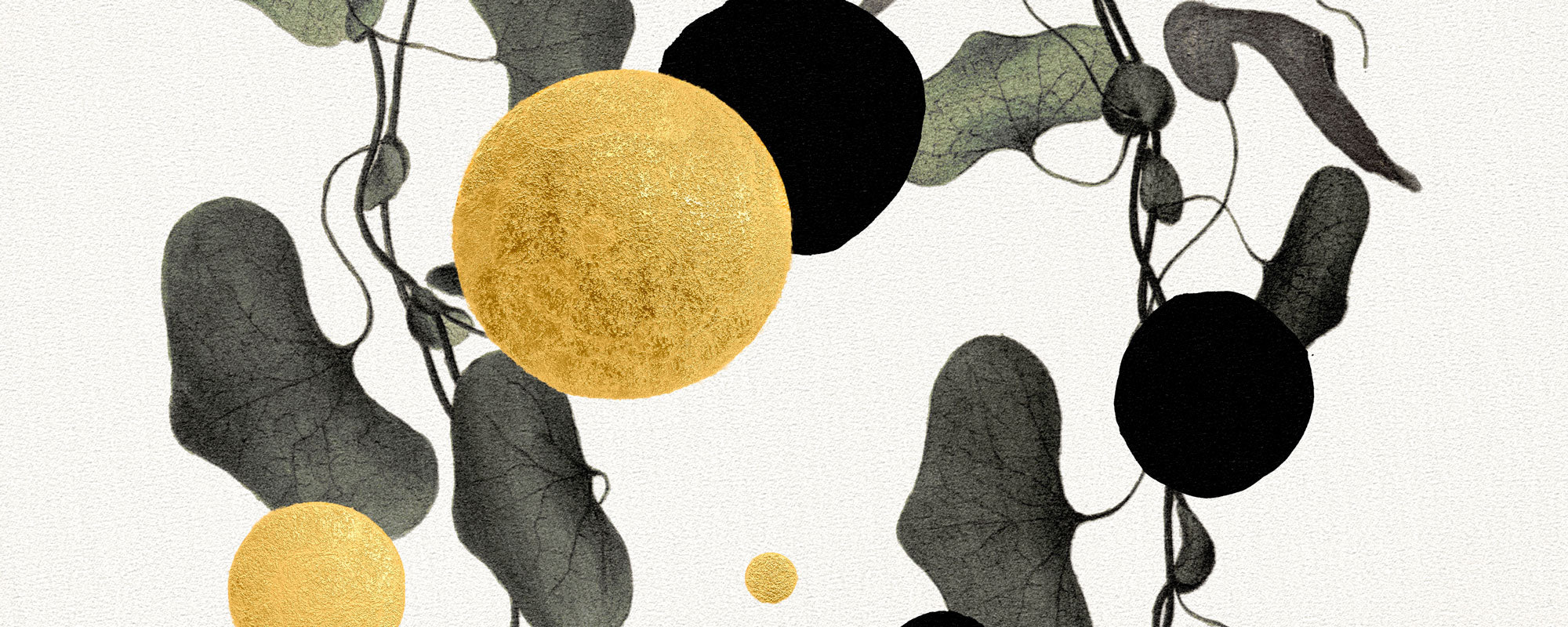
If the gift should feel more ceremonial, hand-finished artworks are a particularly strong choice. Here, the craftsmanship is clearly evident. It could be details in 24-karat gold leaf, hand-layered textures, textural interventions, or other finishing touches that make each piece slightly different.
This type of gift works especially well for recipients with a keen eye for materiality. People who not only see a motif but also read the surface. The light that catches a golden detail. The contrast between the matte paper and a more vibrant finish. The discreet luxury that doesn't shout but continues to reveal itself.
At the same time, there's an important trade-off. Hand-finished works often have a more distinct character. They make a greater statement in a room, so you need to know the recipient's aesthetic fairly well. For a minimalist home, a subtly refined work can be just enough. For more layered interiors, greater drama can be indulged.
3. Original smaller works for a personal gift
Not all original works need to be large or monumental to feel significant. On the contrary, a smaller original work can be an unusually personal gift because it feels intimate. It invites contemplation. One gets closer, sees brushstrokes, collage edges, paper traces, or signs of the hand that created the work.
This form of gift is particularly suitable when the relationship is close – between partners, close friends, family, or as a gift marking a truly significant life event. There is something rare about giving a work that exists only in one copy. Not as prestige, but as precision.
However, it is also the least forgiving category. An original work has more personality than an editioned print, and therefore requires greater certainty in the choice. If you are unsure of the recipient's taste, it may be wiser to choose a strongly curated limited edition work instead. Originality is a quality, but only when it lands correctly.
When exclusive art gifts need to suit the room and lifestyle
The best art gift does not exist in isolation. It must be able to inhabit a space. Therefore, one should consider the recipient's spatial reality as much as the artwork itself.
4. Art on canvas for larger spaces and a hospitality feel
Canvas has a different presence than paper. It appears more architectural, more integrated into the room, and often more generous in scale. As a gift, it is an obvious choice for larger homes, open living areas, reception areas, offices, or interiors where the work is desired to create a clear yet calm focal point.
It is especially interesting for recipients who think in terms of holistic interior design. Here, art is not a small personal layer on top of the decor, but part of the room's fundamental tone. A well-executed canvas work can provide the same experience as a curated hotel interior or a private home with the tranquility of a collector – something complete, yet never rigid.
However, one must be aware of space and proportion. Large formats are generous, but they require walls that can support them. In smaller apartments, a canvas can quickly seem too insistent if the motif is also complex. Therefore, it is often the interplay of format and composition that determines whether the gift feels luxurious or merely large.
5. Curated art series or sets for the design-conscious recipient
Some of the most refined art gifts consist not of one work, but of two or three that communicate with each other. A curated set can create a special sense of thoughtfulness, because the relationship between the works has already been considered. The colors mirror each other. The motifs create rhythm. The compositions hold a room together without becoming overly neat.
This type of gift often hits the design-conscious recipient very accurately. People who appreciate coherence, proportion, and visual discipline will often perceive a series as more sophisticated than a single impulse purchase. This is especially true in homes with modern Scandinavian lines, warm natural materials, or more internationally boutique-style decor.
However, it takes a bit of courage to give multiple works at once. The gift becomes more directive for the room's expression. In return, it can create a cohesive result that the recipient might not have prioritized themselves. When the curation is strong, it feels generous in the right way.
What makes an art gift exclusive - beyond the price
Exclusivity in art rarely comes down to just the price tag. It's about intention and execution. About the size of the edition. About paper quality, pigment, the tautness of the canvas, hand-finished details, and the discipline inherent in a well-balanced composition.
It's also about what's left out. A work becomes more convincing when it doesn't try to please everyone. The exclusive art gift dares to have character. It is curated, not generic. It says something clear, but with enough openness for the recipient to live with it over time.
For many, the safest path will be a signed limited edition print or a hand-finished work, because they combine collector's value, material consciousness, and a high degree of usability in the home. For others, an original work will be the only appropriate gesture. It depends on the relationship, the occasion, and how precisely you know the person who will receive the gift.
In a curated art universe like StoltzeStudio, one truly senses the difference between decorative surfaces and works with real presence. This is the difference a good gift should be built upon.
If you want to give art with longevity, don't choose the most spectacular first. Choose the work that keeps revealing itself. That is usually where the gift finds its life.