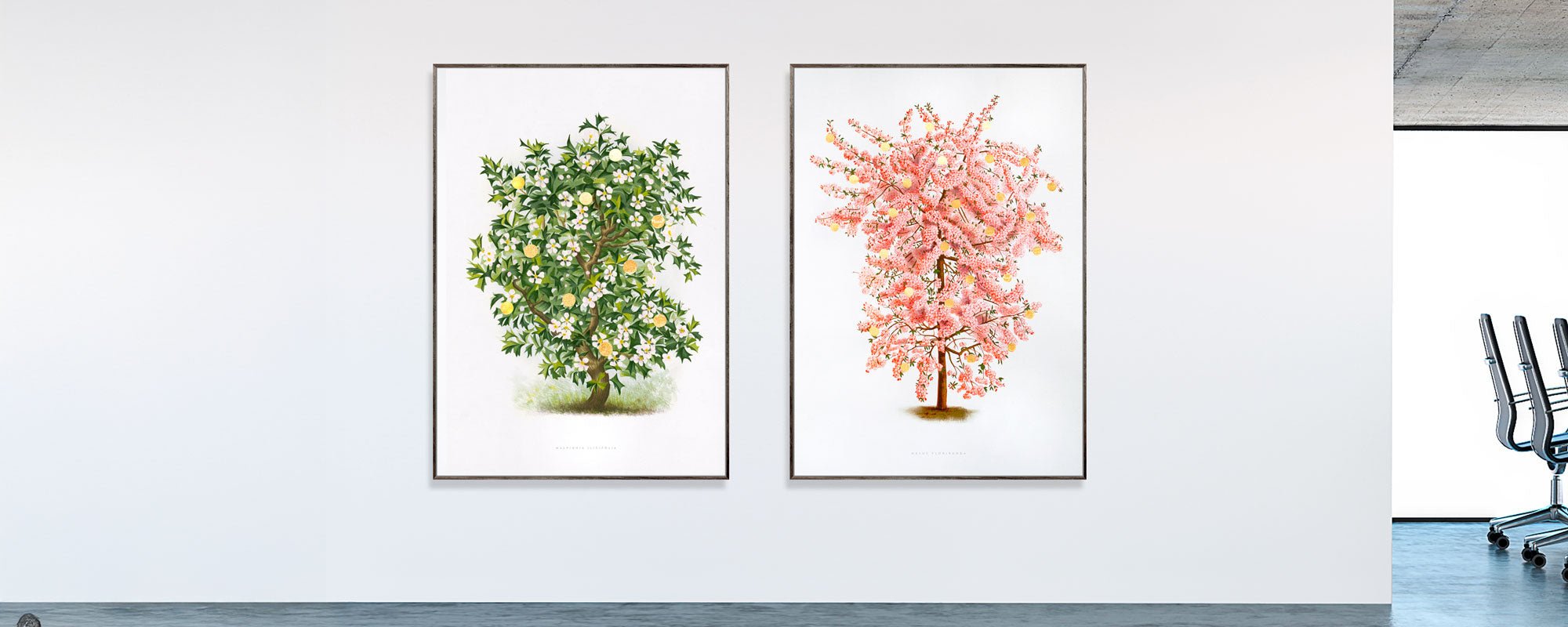
Fine Art Prints Copenhagen for the Curated Home
When a room comes together, it's rarely due to the furniture alone. The crucial layer is often the art – and precisely for this reason, fine art prints in Copenhagen have become a natural beacon for those who desire more than decorative surfaces. A well-chosen print adds gravitas, tranquility, and character. Not as mere wall filler, but as a conscious part of the room's identity.
In Copenhagen, there's a particular sensibility regarding art in the home. The city's interior culture balances the stringent and the sensory, the architectural and the personal. Here, fine art prints are not just a practical way to get art on the wall. They are a way to bring curation, materiality, and artistic integrity into everyday life without compromising on either quality or atmosphere.
What fine art prints in Copenhagen should really mean
The term is often used broadly, diluting the distinction between a common poster print and a true fine art print. For the quality-conscious buyer, the difference lies in the production. A fine art print is defined by its printing method, color reproduction, paper, and overall finish. It must be able to convey a work's nuances, depth, and tactility with precision.
Giclée prints are therefore central to this category. The technique provides a far more refined reproduction than standard prints, especially when the motif contains subtle shadows, complex transitions, or textural details. The result is an image with visual calmness and depth, where colors don't scream, but work with the light in the room.
The paper is as important as the motif. An exclusive cotton paper or museum-quality art paper significantly changes the experience. The surface can give the work a matte, almost velvety appearance, which absorbs light beautifully and emphasizes the artistic expression. On canvas, a different kind of presence emerges – more painterly, more corporeal, often more striking in larger formats.
This is where many buyers feel the difference without necessarily being able to articulate it. A good fine art print doesn't just look better. It feels more complete.
Fine art prints Copenhagen as an alternative to mass-produced wall art
There's a reason why standard posters quickly lose their appeal in a well-considered home. They are made to be widely functional, quick, and inexpensive. Fine art prints are the opposite. They appeal to those who want a more precise relationship between the artwork and the space it will inhabit.
The biggest difference is not just quality, but intention. When a work is created or curated with an eye for composition, edition, paper choice, and format, a different kind of value emerges. Not necessarily because it should be inaccessible, but because it carries a clear artistic decision.
For some, it's about finding something more personal than what everyone else already has hanging. For others, it's about buying into an aesthetic stance. Both are legitimate. But it requires choosing with a little more thought than based on the color of the sofa alone.
Materials, editions, and the details that change everything
When evaluating fine art prints in Copenhagen, it's rarely enough to ask if the motif is beautiful. The relevant question is how the work is produced, and how much consideration has gone into the object as a whole.
Limited editions are significant because they create boundaries. A numbered and signed print feels different from an open reproduction, precisely because a clear framework has been set for the edition. This gives the work a collectible character and a different degree of closeness between artist and buyer.
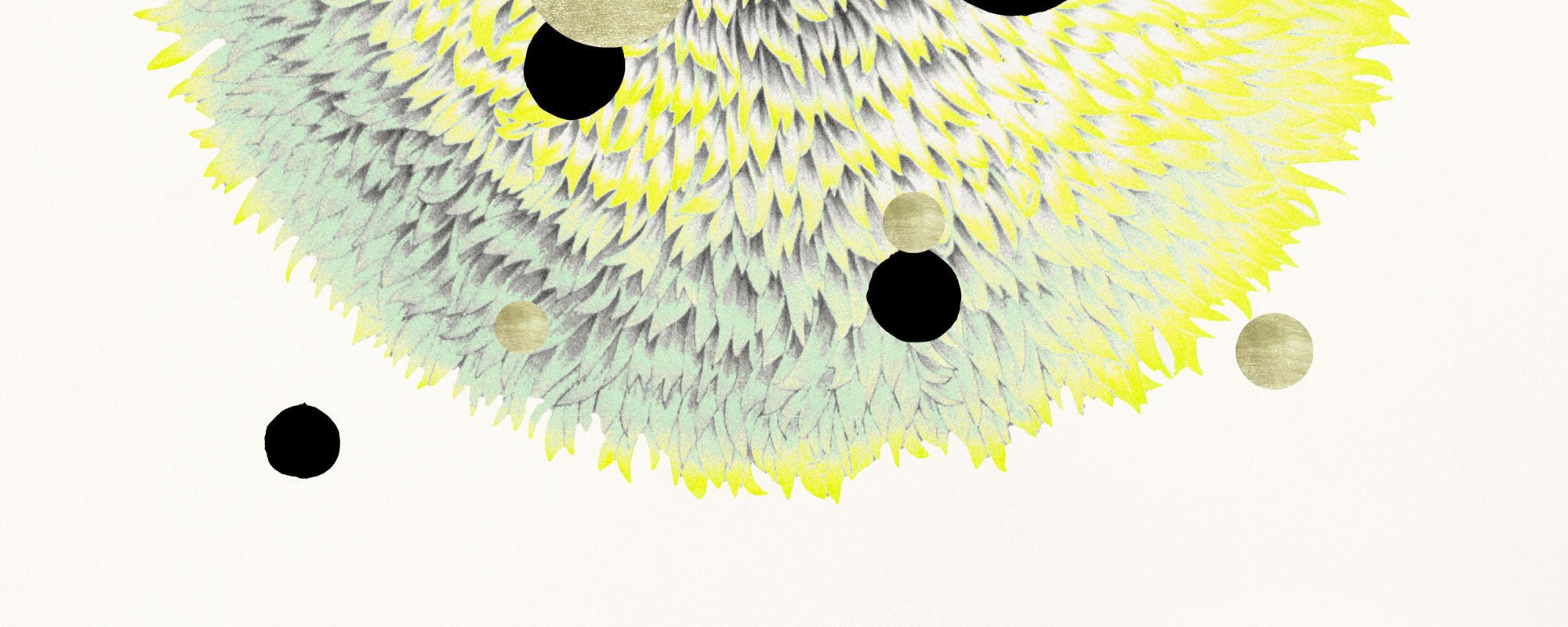
Hand-finished details further elevate the experience. This could be gold leaf, manual markings, or subtle variations from print to print. Such elements add singularity to the work. This doesn't mean everything has to be dramatic or ornate. On the contrary, the most discreet detail can be the one that makes all the difference.
There's also a practical layer. A large print on heavy paper requires different framing than a lighter poster. A canvas work can stand strong without glass, while a paper work often benefits from a frame that protects without dominating. So, quality is not just something you see in the print itself. It's seen in how the work is conceived all the way through.
How to choose the right fine art print for your space
A print should not be chosen as a last-minute styling. The more complete a home or hospitality environment is, the more evident it becomes when the art has been chosen too hastily. The best starting point is to look at the rhythm of the room. Where is there visual silence, and where is there already a lot of information?
In a room with clean lines and few material changes, a more poetic or textural motif can create depth. In a room with many patterns, books, or objects, a calmer work will often function better. Contrast is important, but balance is more so.
Scale is often underestimated. Works that are too small easily get lost on large walls, while oversized motifs can overwhelm an intimate space. A good print must have enough physical authority to hold its own, but not so much that it takes over the entire atmosphere of the room. This is particularly relevant in dining rooms, entryways, and workspaces, where one stays differently and views the work from multiple angles.
Color choice should also not be reduced to matching. A print may well add a tone not already present in the room. The right shade can bring together wood, stone, textile, and metal without directly repeating them. This is where the kind of discreet luxury arises that is rarely achievable with more generic wall art.
Why the physical art experience still matters
Even in a digital purchasing journey, there is something irreplaceable about experiencing art physically. The screen flattens everything. The weight of the paper, the tactility of the surface, and the depth of the colors only truly come into their own when you stand before the work.
This is especially true when investing in premium prints. Two works might look similar online, but be experienced completely differently in reality. One might appear sharp and vibrant, the other harsh or lifeless. This difference often lies in the material and the quality of the production itself.
Furthermore, an atelier or studio visit offers more than just product information. It provides insight into the curation. Why do precisely these works belong together? Which formats are intended for more intimate spaces, and which require space around them? In Copenhagen, this type of experience makes particular sense because the city has an audience that doesn't just buy with their eyes, but with a clear sense of completeness and atmosphere.
At StoltzeStudio, the physical setting is conceived as more than just a sales point – a sensory sanctuary where gallery, studio, and coffeeshop meet in a holistic art experience. This alters the pace of the decision, and it enhances the art.
Fine art prints Copenhagen for home, office, and hospitality
The best prints don't just work in private homes. They can also define the atmosphere in offices, meeting rooms, boutique hotels, and restaurants, where visual identity directly impacts the experience of the place.
In the home, the choice often revolves around intimacy and personal resonance. In professional spaces, it's also about signaling value. A well-considered work speaks volumes about standards, taste, and ambition. This is especially true in environments where guests or clients gauge quality through details.
Here, fine art prints offer an interesting solution because they combine artistic merit with a certain flexibility. One can work with series, sizes, and curated image sequences without losing the sense of originality. But it requires choosing prints that are actually produced with the precision and materiality the space deserves.
Therefore, it's also worth accepting that budget and ambition must align. If the goal is a complete, sophisticated environment, it will almost always be evident when the art has been chosen as an afterthought.
When a print keeps giving to the space
Perhaps the most interesting thing about fine art prints is that they don't need to shout to be significant. The best works unfold over time. You discover a tone in the paper in the morning light, a detail in the composition in the evening, a new relationship to the room's materials after a rearrangement.
It is precisely there that the difference between decoration and art becomes clear. Decoration satisfies a void. Art creates a presence. And when a print is executed with uncompromising dedication in motif, material, and finish, it doesn't just become part of the decor. It becomes part of the way the room feels.
If you're looking for something that can keep that relationship alive, then choose slower, feel the materials, and let quality have the last word.