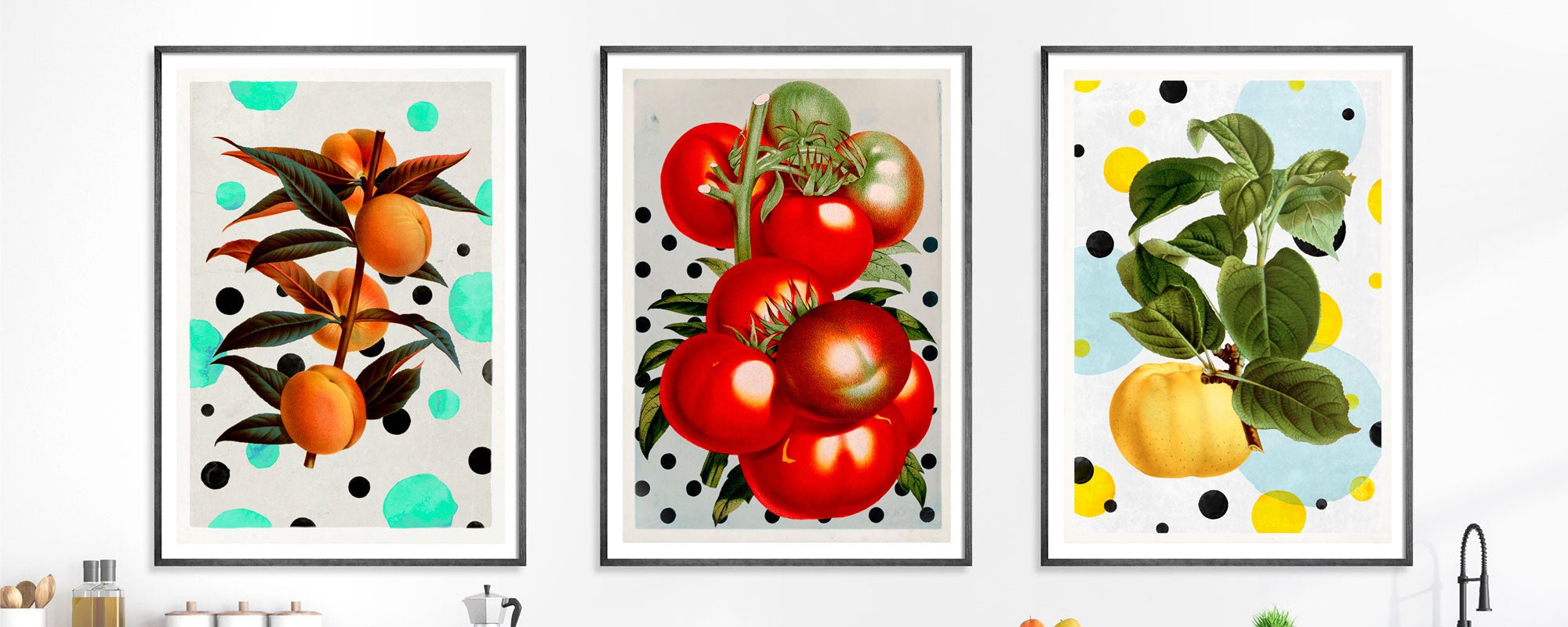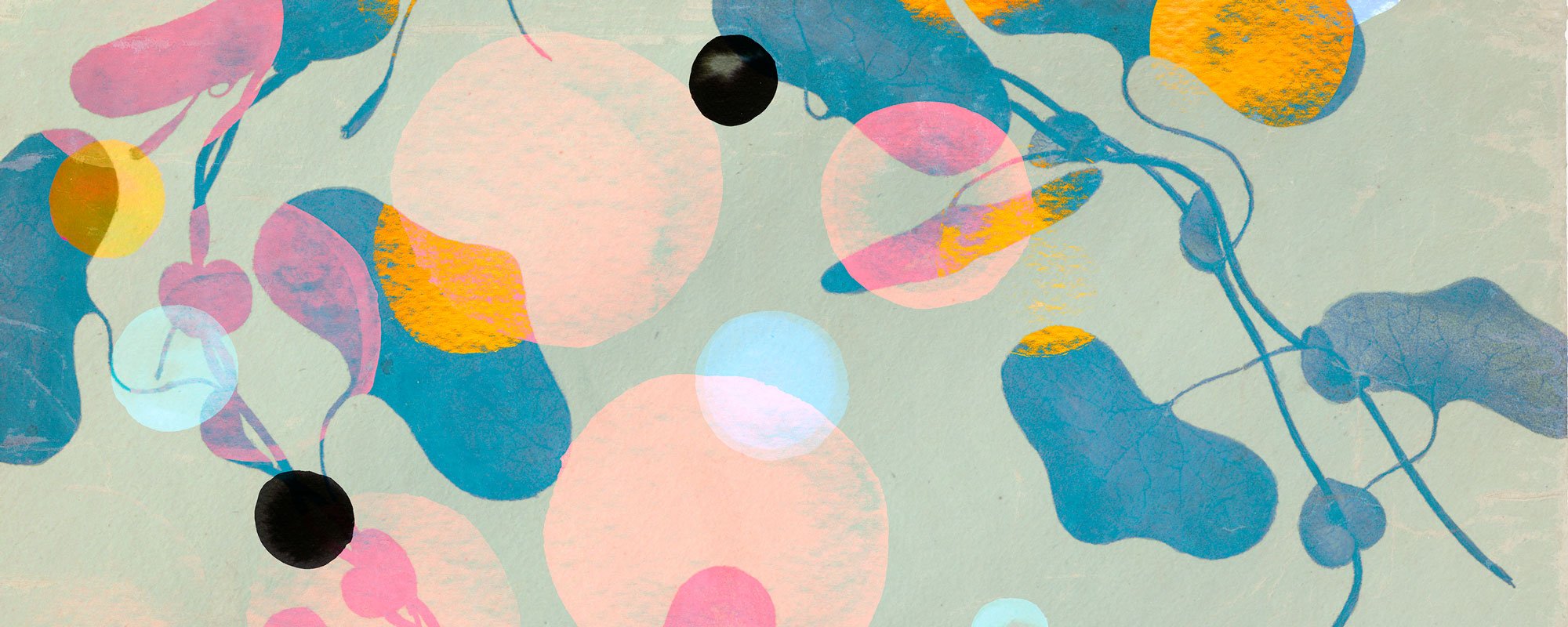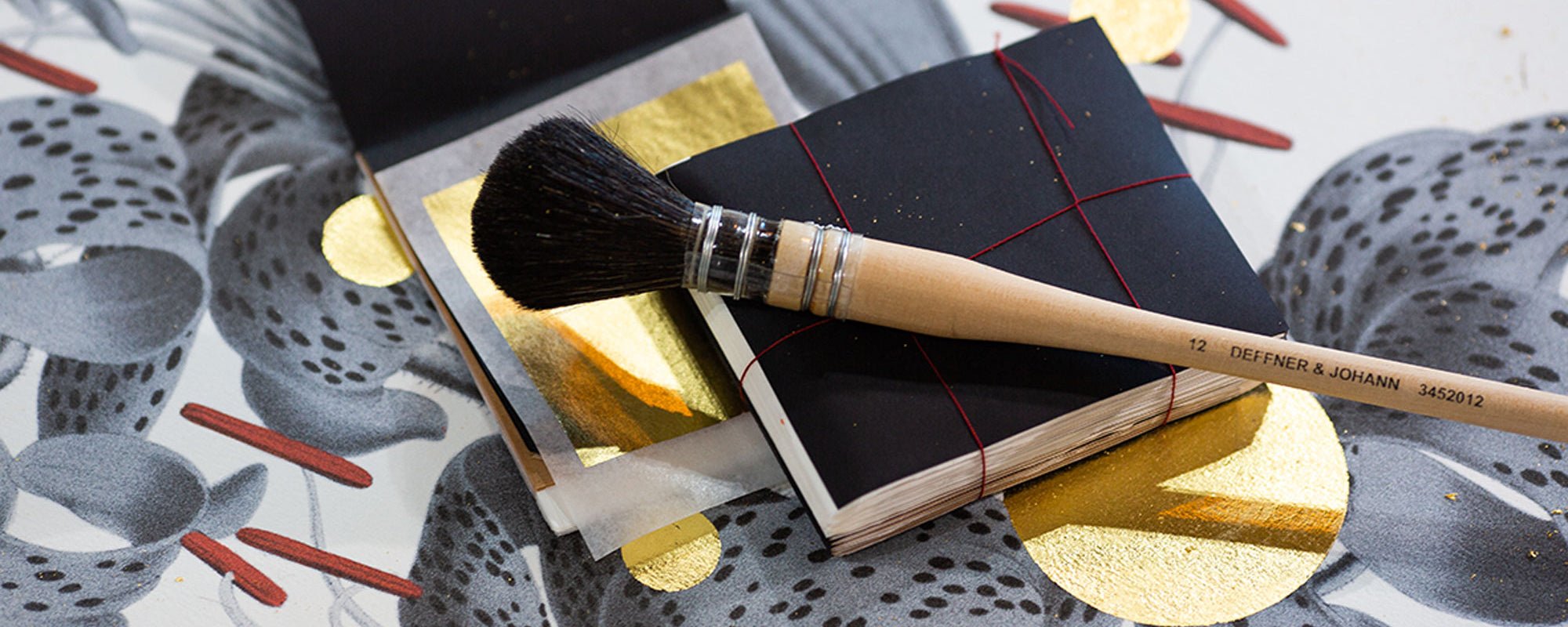
Hand-applied gold leaf on art print
An art print can be precise, refined, and technically perfect – but it's only when the surface meets the hand that the special tension arises, making a piece feel present. Hand-applied gold leaf on art prints is precisely the type of enhancement that radically changes the experience. Not by shouting louder, but by adding a quiet intensity where light, texture, and material begin to work together.
There's a reason why gold leaf continues to fascinate in both classical and contemporary art. It doesn't just reflect light; it creates movement. A motif that appears calm in the morning light can take on an almost architectural glow in the evening sun. The same print changes character throughout the day, and that variability is a large part of its appeal.
What hand-applied gold leaf actually adds to an art print
When gold leaf is applied by hand to an art print, it adds something that cannot be fully simulated in a digital print. A metallic color can imitate shine, but not the living surface, the small variations, and the almost organic reflection that occurs when ultra-thin sheets are manually placed.
This means the work moves away from the reproducible and into something more singular. Even if the motif is printed as an edition, each piece with hand-finishing becomes slightly different. For collectors and design-conscious buyers, this is significant. Not as an effect-chase, but as a sign of artistic integrity and uncompromising craftsmanship.
Gold leaf also adds depth. Not necessarily physical depth in high relief, but an optical depth where the eye is captivated by the contrast between the matte paper and the light-sensitive surface. Especially on giclée prints on exclusive paper qualities, a beautiful balance emerges between the calmness of the pigments and the vibrant character of the gold surface.
Why the technique requires precision
Hand-applied gold leaf seems immediately poetic, but the process is anything but random. The substrate must be correctly prepared, the adhesive must have the right tackiness, and the placement must be aligned with the motif's composition. Even small shifts in timing or pressure can significantly alter the result.
Therefore, hand-finishing is not just a decorative touch. It's a discipline where material understanding is crucial. The paper's surface, the print's pigment saturation, and the motif's dark-light contrasts all play a role. A highly textured paper can give the gold a more uneven and tactile character, while a smoother surface can emphasize a more mirrored glow. Neither is automatically better; it depends on the work's intention.
In a successful art print with gold leaf, you precisely sense this balance. The gold should stand out, but it must not overpower the motif's rhythm. When it works best, it doesn't feel applied; it feels embedded in the work's own logic.
24 karat or other leaf metal?
For quality-conscious buyers, it's worth knowing the difference. 24-karat gold leaf has a particularly warm, pure tone and does not oxidize in the same way as imitations or other leaf metals. It provides a more stable and noble surface over time.
Of course, there are also other metallic solutions that can be interesting for certain expressions. Composition gold leaf and composite materials can create cooler or more raw effects, but they don't have the same color depth or collectible weight. If the goal is a work with clear material authenticity, real gold leaf is often the most convincing choice.
Which motifs are suitable for hand-applied gold leaf?
Not all motifs benefit from gold. That's an important point. Hand-applied gold leaf on art prints works best when it supports the composition rather than serving as visual embellishment.
Abstract works, collage-based compositions, archival motifs, and stylized natural references often have a strong interplay with gold leaf. Here, the gold can highlight lines, create pauses in the surface, or draw light into darker areas. In more figurative motifs, it can be used selectively – as a discreet accent, a horizon, an ornamental trace, or a fragmented background that gives the image an aura without making it theatrical.
It also depends on the format. On smaller prints, gold leaf can feel intense and concentrated. On larger works, it can open up the composition and give the space a more atmospheric reflection. Therefore, the choice should never be made in isolation. Motif, size, framing, and placement within the interior should be considered together.
The interplay of light, space, and surface
Gold leaf is a material that only truly comes alive when interacting with its surroundings. An art print with hand-applied gold will behave differently in a north-facing room than in a sunny living area with warm tones. This doesn't mean one should be overly cautious, but rather aware that the work's expression changes with the light.
In minimalist spaces, gold can add warmth and tactility without disturbing the visual calm. In more layered interiors, it can unify materials like wood, stone, brass, and textile into a shared tone. This is often where the most refined results emerge – when the work is not just hung, but curated into a cohesive whole.
It's also worth considering glass and framing. Museum glass can protect the print while preserving a clear experience of the surface, but in some cases, reflections will compete with the gold. There is no single correct answer. If the work is to hang in a room with a lot of daylight or high foot traffic, protection may be crucial. If, on the other hand, the goal is maximum proximity to the material, a more open presentation might be interesting, as long as the conditions allow.
Is hand-finishing always the right solution?
No. And precisely for that reason, the exclusive finish is interesting. Hand-applied gold leaf should be chosen when one desires a work with clear materiality and a more sensory presence. If a stark, graphic, or completely understated expression is sought, a plain print without embellishment might be the strongest choice.
There is also a budget aspect. Manual labor, noble materials, and edition logic naturally place the work in a higher segment. For many, that is precisely the point. One invests not only in a motif, but in the process, the finish, and the difference between mass production and studio-anchored quality. However, if the work is to function more functionally in a larger gallery wall with many elements, a simpler print can sometimes create better balance.
Why this technique appeals to collectors and design-conscious buyers
There is a special satisfaction in works where both idea and hand can be discerned. This is a quality that many seek today, precisely because so much visual material is flat, fast, and fully reproducible. Hand-applied gold leaf breaks with that logic.
It adds singularity to the edition and gives the work a more personal aura. Small differences in how the leaf meets the surface, microscopic transitions at the edge, and variations in reflection keep the eye returning. For the buyer who wants more than wall decor, this is crucial.
In a curated home, a quiet office, or a hospitality environment with a distinct identity, this type of work can serve as a discreet anchor point. Not necessarily the loudest element in the room, but often the most enduring. This is the kind of quality you notice again after weeks, months, and years.
At a studio-based brand like StoltzeStudio, hand-finished art prints make particular sense because the technique extends the connection between print, material, and artistic craftsmanship. It is not an extra layer for effect; it is a refinement of the work's own voice.
How to choose the right art print with gold leaf
Start by considering the temperament of the motif. Is it quiet, graphic, poetic, dramatic? The gold should not compensate for a weak image, but support a strong one. Then consider the paper, the format, and the context in which the work will live. A print for an entryway requires something different than a piece above a sofa or in a bedroom with subdued lighting.
Also inquire about the edition, signature, and materials. Genuine gold leaf, meticulously crafted print quality, and clear documentation are important parameters if you are buying with both aesthetics and long-term value in mind. Often, the difference reveals itself in the details.
And perhaps most importantly: choose with your eyes, but also with your body. The best works are not just beautiful in passing. They create an atmosphere you want to linger in. When an art print with hand-applied gold leaf achieves this, it becomes more than a decoration. It becomes a quiet center of light, material, and attention.