How do you choose art for your home's entryway?
The entryway is the first close-up of a home. Here, guests don't see the entire decor, but a concentrated atmosphere: the light from the hallway, the material of the floor, a jacket over a chair, and the artwork that sets the tone before the rest of the rooms unfold. The question, therefore, is not just, how do you choose art for an entryway, but what feeling do you want the arrival to convey.
Art in the entryway should be precise. Not necessarily loud, but deliberate in its format, its colour temperature, and its ability to transform a transitional space into a place with its own character. A well-chosen piece can create calm in a narrow hallway, add depth to a white wall, or make an otherwise functional space feel like part of the home's overall narrative.
How to choose art for the entryway?
Start with the space, not the motif. Entryways are often smaller than living rooms and bedrooms, but they are experienced quickly and up close. Therefore, scale matters more than you might think. A piece that appears discreet in a large studio can achieve a monumental presence above a narrow console table or at the end of a hallway.
Look at the free wall space and the usual distance one has to it. In a compact Copenhagen entryway, a single medium-sized print is often more compelling than many small pictures, which can end up looking like decoration rather than curation. In a long hallway, a vertical piece can create height, while a horizontal format can emphasize the room's direction and give the wall a calm rhythm.
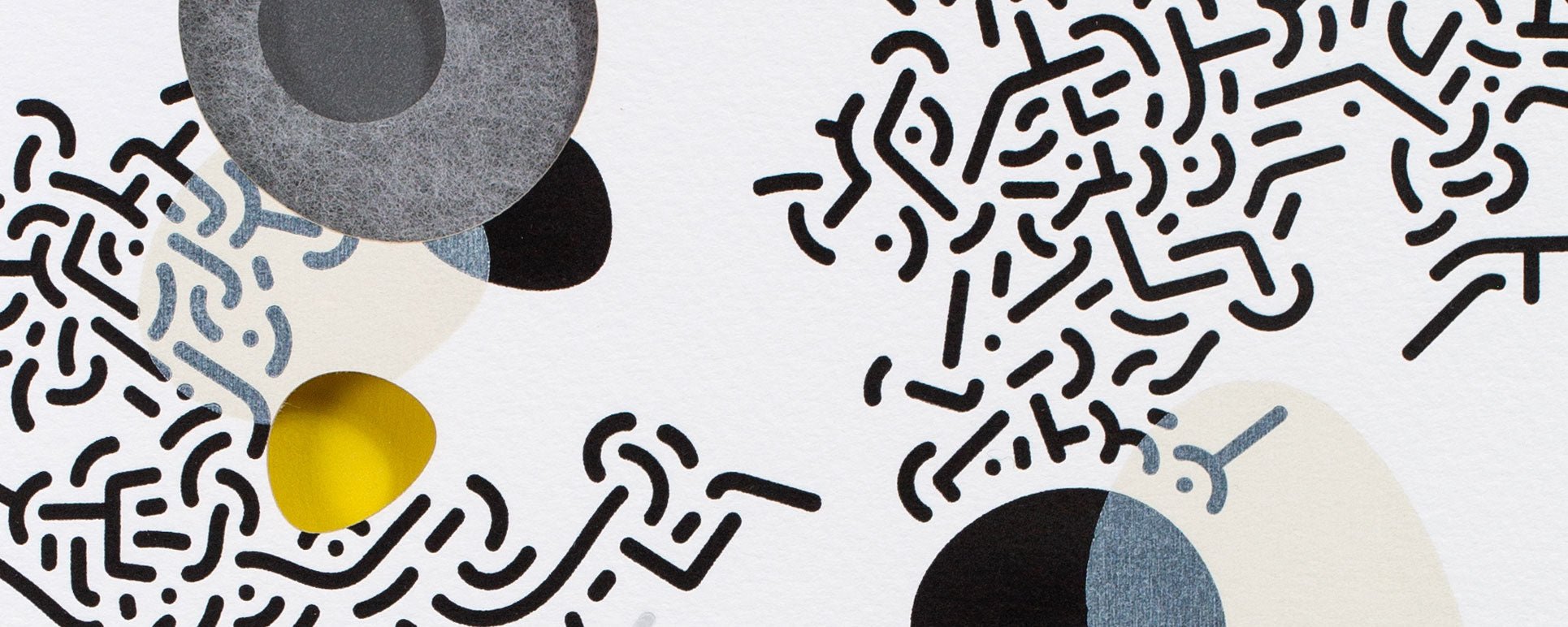
This doesn't mean that small formats are without power. An intimate collage, a graphic composition, or a piece with fine handcrafted details can become particularly captivating when placed so that one naturally gets close to it. Art should reward a second look.
Give the artwork space to be seen
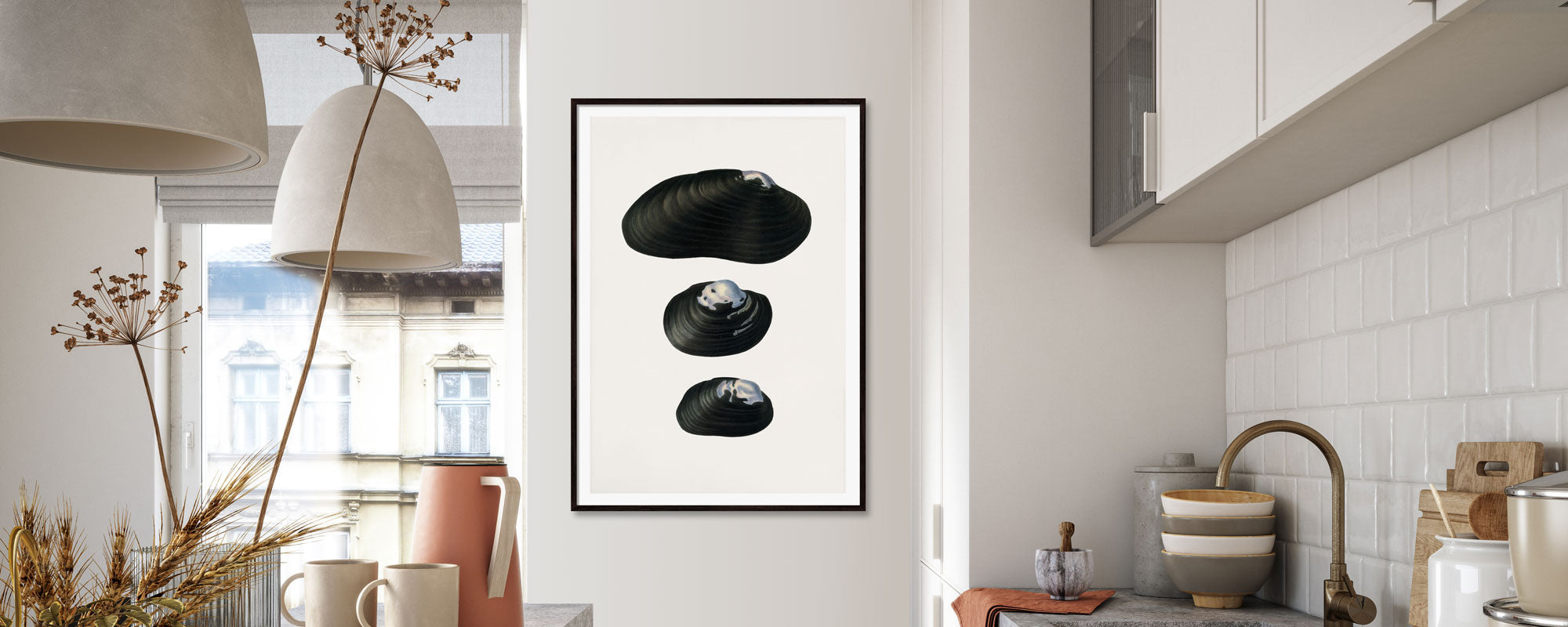
An artwork should not be squeezed between coat hooks, door frames, and mirrors just because the wall is available. Instead, choose a single, clear placement where the art has space around it. If the entryway has many practical elements, the wall at the end of the hallway can be an ideal spot. It creates a visual focal point to move towards and makes the passage more deliberate.
As a rule, hang the artwork so that its visual centre is around eye level. In an entryway where one quickly passes by, however, it can work well to hang it slightly higher if the piece is viewed from a distance, or lower if it is meant to be experienced close to a bench or console. There is no correct centimetre rule, only a balance between architecture, line of sight, and the artwork's own weight.
Choose a colour palette that welcomes
The art in the entryway does not need to repeat the colours from the rest of the home. On the contrary, it can serve as an elegant transition between inside and out. The crucial thing is that the colours relate to the space, either through harmony or a controlled contrast.
In an entryway with whitewashed walls, wood, natural stone, or warm metals, shades of ochre, deep blue, dusty pink, charcoal black, or muted green will often add texture without being intrusive. A piece with archival motifs and layered surfaces can create a poetic contrast to clean, modern lines. In a more colour-saturated home, a monochrome motif or a simple black-and-white composition can be the pause that makes the whole appear sharper.
Also consider the changing light of the day. Many entryways have limited daylight, and colours that feel vibrant in a bright room can close in the evening. Works with clear contrasts, warm undertones, or a matte, tactile surface often have a special presence in artificial light. Gold leaf or other reflective details can add a discreet glow, but they require thought. In a room with many shiny surfaces, the effect can be unsettling, while on a calm, matte wall, it can feel like a quiet highlight.
The energy of the motif must suit the arrival
The motif is not just a matter of taste. It dictates the pace of the room. An abstract composition with open spaces and balanced forms can make a busy morning calmer. A figurative collage, a botanical fragment, or a graphic archival motif can spark curiosity and give the guest something to return to.
There's a subtle difference between art that awakens a room and art that overwhelms it. If the entryway already has patterned flooring, coloured tiles, or striking furniture, a piece with a few precise elements might be the strongest choice. If, on the other hand, the room is neutral and almost anonymous, the art can carry more visual complexity.
Many choose safe motifs for the entryway because the space is seen by everyone. But the first wall is allowed to have an attitude. It can be elegant, dreamy, dark, humorous, or almost ceremonial. The essential thing is that the piece feels chosen, not just placed. The character of a home often begins where one dares to be less generic.
One piece or a small hanging?
A single signed fine art print is often the most refined choice in a narrow entryway. It gives the motif authority and allows the quality of the paper, the depth of the pigments, and any handmade details to stand out. Choose a format with sufficient physical presence so that the piece can be felt, even when seen for only a few seconds.
A smaller hanging can work in a wide entryway or by a staircase, where the wall is experienced in motion. Here, the works should have a clear common denominator: related colours, the same frame type, similar paper qualities, or a consistent artistic hand. Without that connection, the whole easily becomes fragmented.
Avoid turning a picture wall into a collection of random memories, unless that very personal, lively disorder is the aesthetic of the home. In a more austere interior, three works of different sizes and common tonality often appear stronger than seven pictures competing for attention.
The frame is part of the artwork
The frame is not an afterthought. It is the transition between art and architecture and can either refine the artwork or weaken it. A narrow frame in oak, walnut, or black lacquered wood offers different temperatures: oak appears light and tactile, walnut adds depth, and black creates graphic precision.
For a giclée print on exclusive paper, a passe-partout can give the motif space and highlight the paper's character. This is particularly effective in an entryway, where the artwork is often seen up close. Canvas has a different physical presence and can sit more directly against the wall, especially in a home with more raw or sculptural materials.
Choose anti-reflective glass if the entryway has spotlights, windows, or shiny doors. No fine artistic surface should be reduced to a mirror of the ceiling lamp. Practical choices like this are part of the uncompromising approach that distinguishes between a nice hanging and a complete art experience.
Let quality be felt in everyday life
The entryway is an active space. Doors open, bags are swung in, and moisture from outerwear enters the home. Therefore, art should be placed with consideration for wear and tear, direct sun, and repeated bumps. A piece doesn't have to be fragile to be exclusive, but it deserves a placement that protects the paper, colours, and frame.
Original works and limited editions have a special resonance in the entryway because they make the daily passage more personal. Numbering, signature, and hand-finishing are not just collector's details. They are traces of an artistic process that adds presence to the room and makes the arrival less anonymous.
At StoltzeStudio, art is not considered wall filler, but a sensory part of the space one lives in. When format, material, and motif are chosen with care, the entryway becomes a small sanctuary between the city and the home. Therefore, choose the piece you want to meet again, even on days when you are rushing out the door.