Art for hotels in Copenhagen with character
A hotel room only becomes a memorable place when it offers more than just comfort. Therefore, art for hotels in Copenhagen is not about filling empty walls, but about giving the guest a sense of place, rhythm, and personality from the first glance across the reception area to a quiet morning coffee in the room.
In a market where many hospitality interiors look similar, art can create a unique difference that cannot be replicated with standard furniture or a well-chosen color palette alone. An original artwork, a hand-finished fine art print, or a small, precisely placed series can add gravitas to a space. It signals that the experience is curated with the same uncompromising quality as the cuisine, the bedding, and the hospitality.
Art for hotels in Copenhagen is part of the experience
Copenhagen is known for a design culture that balances tranquility, material consciousness, and a sharp visual identity. This places high demands on hotels that wish to appeal to both international guests and a local, design-conscious audience. Art should not function as decorative background. It should be an integral part of the hotel's overall narrative.
In a historic city hotel, archive motifs, collage, and processed photographic elements can create a contemporary connection to the layers of the neighborhood. In a new hotel by the harbor, poetic compositions in muted tones can mirror the light, water, and open urban spaces. A more intimate boutique hotel might choose works with striking color fields or organic details that add warmth without making the space feel restless.
The crucial factor is not whether the artworks are loud or subdued. It is whether they are chosen with intention. Guests quickly sense the difference between art bought as the final step in interior design and art that has helped define it.
Start with the hotel's unique narrative
Successful art curation does not begin with sizes and frame types. It begins with a question: What feeling should the guest take away from here?
Some hotels aim for an experience of urban energy, where graphic works, deep contrasts, and tactile surfaces support a vibrant lobby and a social bar area. Others seek a sensory sanctuary, where natural references, muted palettes, and open compositions allow the eye to rest. Both approaches can be powerful, but they require different artistic sensibilities.
It helps to define three layers in the narrative. First, the hotel's architecture and materials: Is there dark wood, limestone, brass, concrete, or soft textiles? Next, the social energy of the place: Is it a hotel for business travelers, weekend guests, creative teams, or culinary stays? Finally, the emotional temperature: Should the space feel private, ceremonial, playful, or contemplative?
Once these three layers are clear, it becomes easier to select artworks that create cohesion without being too literal. Art should open up a space rather than explain it.
The lobby should create a deep first impression
The lobby is the hotel's visual handshake. Here, the artwork meets the guest in motion, often amidst many other impressions: luggage, reception, light, music, and conversations. A single large artwork can therefore be more effective than a dense arrangement of smaller pictures.
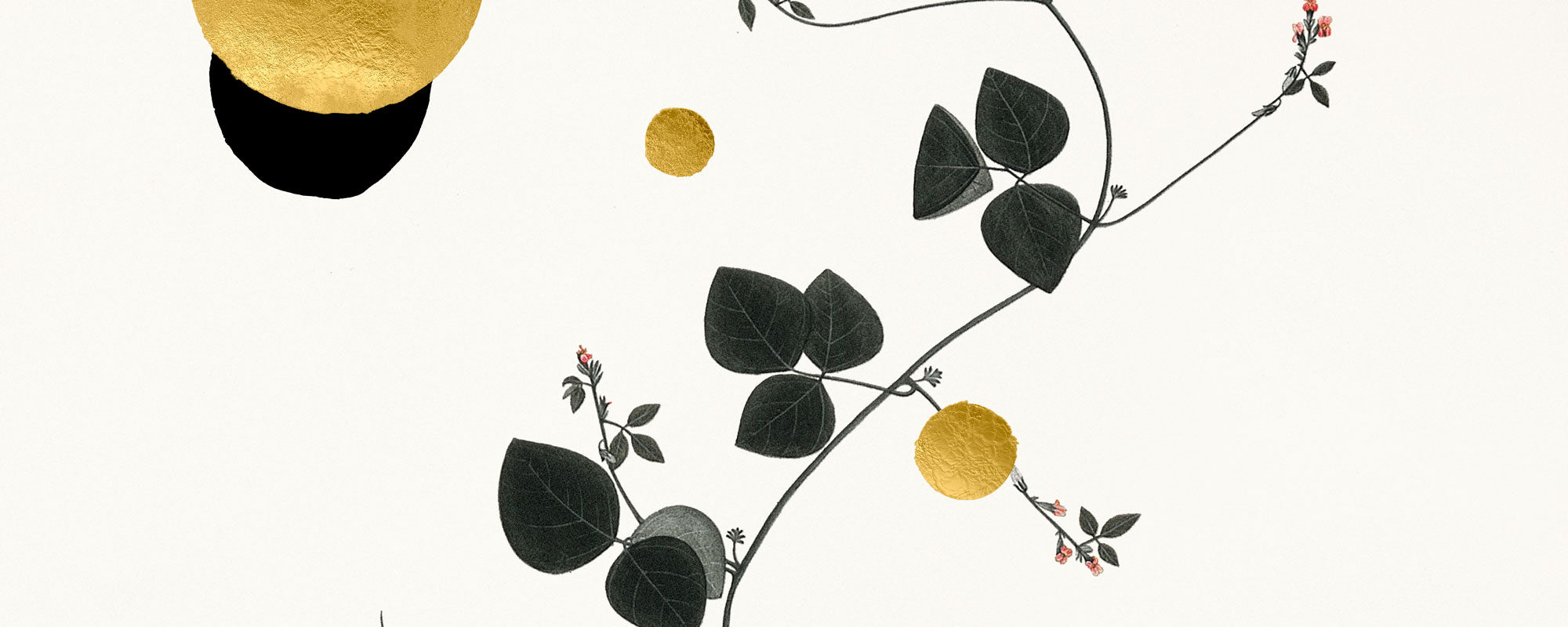
Choose a motif or a composition with a clear silhouette and sufficient visual tension to be seen from a distance. This doesn't necessarily mean strong colors. A large artwork in dusty shades with a hand-finished detail in gold leaf can subtly catch the light and change character throughout the day. It gives the reception area a sense of materiality and presence.
Rooms should withstand repetition without becoming uniform
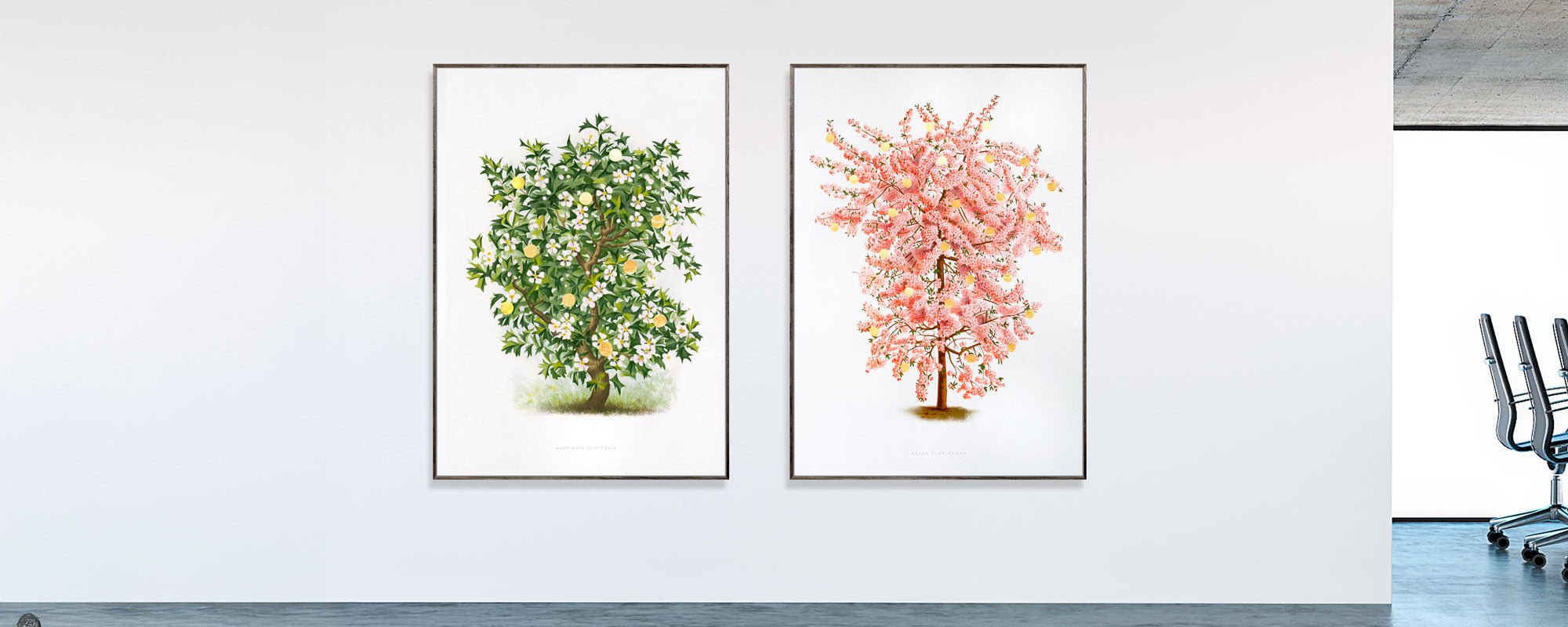
In the rooms, the task is more nuanced. Art should create a personal space, but it must not disturb the tranquility needed for sleep, work, or the view. Here, series work particularly well: artworks with a common visual tone, but with variations in motif, cropping, or color.
A numbered limited edition gives each room its own identity while maintaining the hotel's overall aesthetic. This is often stronger than repeating the exact same poster on all floors. Guests experience the room as individually curated – even when operations require a clear and scalable solution.
Materials make a noticeable difference
In hospitality environments, art is viewed up close. Guests pass it multiple times a day, perhaps photograph it, and experience it in both daylight and artificial light. Therefore, the choice of materials is not a technical detail, but part of the artwork's expression.
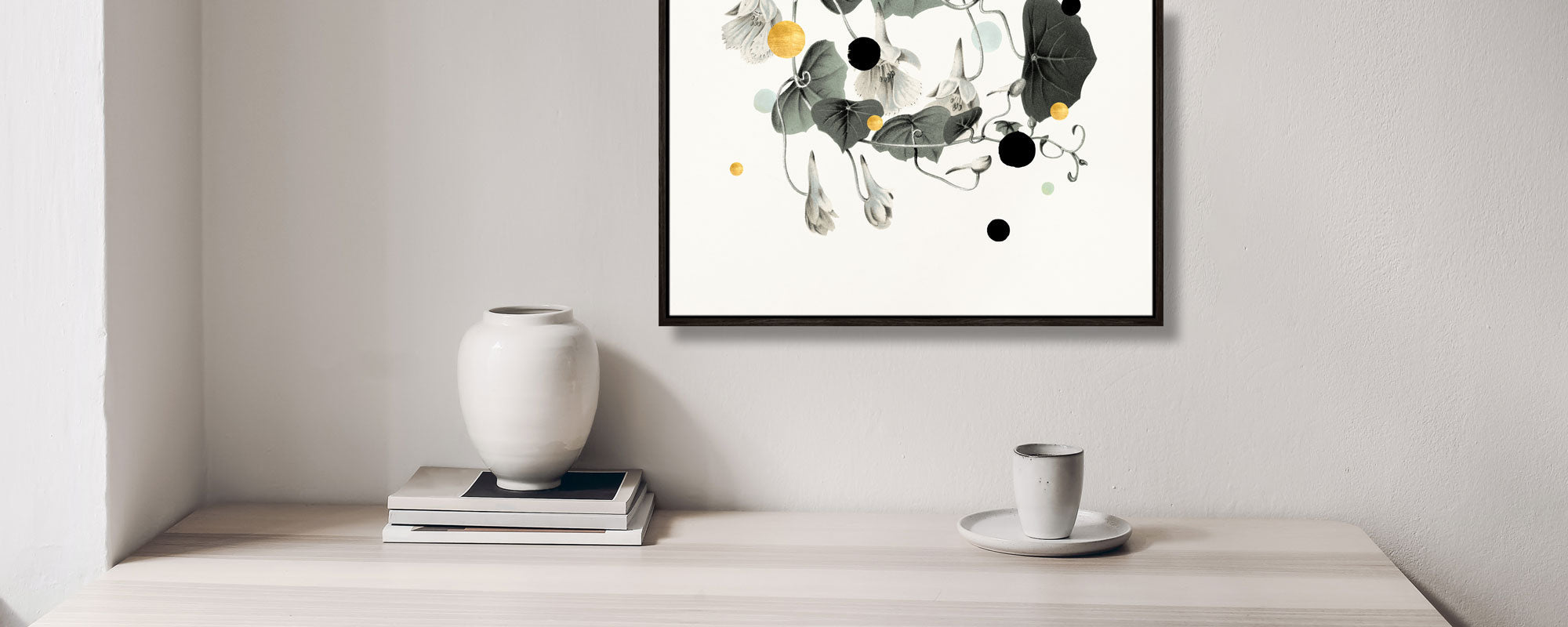
Giclée prints on exclusive, heavy paper have a depth and nuance that particularly shine in works with subtle color transitions, collage, or photographic textures. Canvas can provide a more painterly, tactile appearance and works well in larger formats where the artwork needs a physical presence. A hand-applied finish with, for example, 24-carat gold leaf can add a precise, lively shimmer, but should be used with discipline. When everything glitters, the detail loses its impact.
The framing is equally central. Oak, dark-stained wood, black aluminum, or a sleek brass profile significantly alter the artwork's voice. A warm wooden frame can anchor a cool, graphic motif, while a minimalist frame allows a more complex artwork to stand out clearly. There is no single correct choice. It depends on whether the art should blend into the architecture or create a deliberate counterpoint.
Create rhythm between common areas and quiet zones
A hotel is not one room, but a sequence of transitions. Lobbies, corridors, elevator zones, restaurants, meeting rooms, and guest rooms each have their own pace. The power of art lies in its ability to guide guests through these shifts without visible signs.
In corridors, smaller artworks in series can create rhythm and make transit areas part of the experience. Here, motifs can have a clear common tone, but avoid hanging them as a uniform corridor decoration. Variation in format and spacing creates visual pauses.
In the restaurant and bar, art can have more intensity. Guests spend longer in these spaces, and artworks can become conversation starters. At the same time, they should function under varying lighting and not compete with the menu, table settings, or decor. A significant artwork behind the bar can be stronger than many small visual statements.
Meeting rooms require a different discipline. Art here should have character but not dominate the space or disrupt concentration. Abstract compositions, textured surfaces, and works with calm color progressions often provide the best balance.
Avoid anonymous hotel art
The most common mistake is choosing art that is so neutral it neither takes risks nor tells a story. Mass-produced motifs can be cheap and easy to replace, but they rarely create a stay that guests will share or remember. A hotel with high ambitions should not resemble a random real estate listing with larger furniture.
The opposite mistake is choosing art solely for its effect. An artwork might be powerful in isolation but wrong in a lobby if it makes the space visually harsh or clashes with the hotel's guest experience. Curation is precisely the ability to see the whole picture: light, acoustics, materials, flow, budget, and artistic integrity.
Therefore, the budget should not be allocated solely by the number of walls. Instead, prioritize areas where art contributes most to the experience: arrival, central common areas, and zones where guests take photos or spend extended periods. A smaller, well-chosen collection of high quality is more convincing than many compromises.
For hotels seeking a distinct, atelier-anchored signature, StoltzeStudio can contribute with curated fine art prints, limited editions, and works with handmade details, where paper, pigment, and finish are allowed to be part of the narrative.
An investment in recognition, not just decoration
Good hotel art works slowly. It might first appear as a special atmosphere in a picture from the stay, a detail the guest notices on the way to breakfast, or a work one returns to with a glance after a long day in the city. It is precisely this type of visual memory that creates recognition.
Therefore, don't choose the art last. Allow it to be included early in the process, while the hotel's identity can still be shaped. The strongest spaces emerge when art does not hang on the wall as a mere conclusion, but becomes a quiet and precise part of what the guest came to experience.