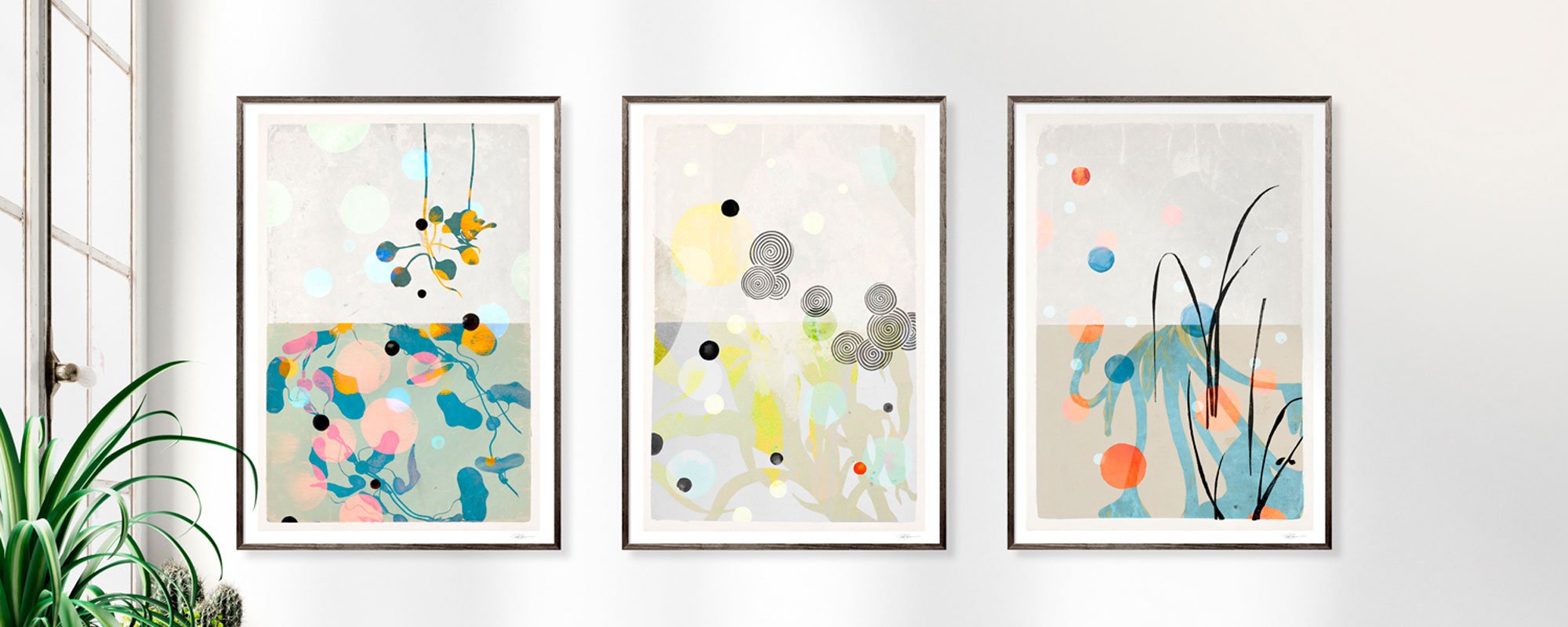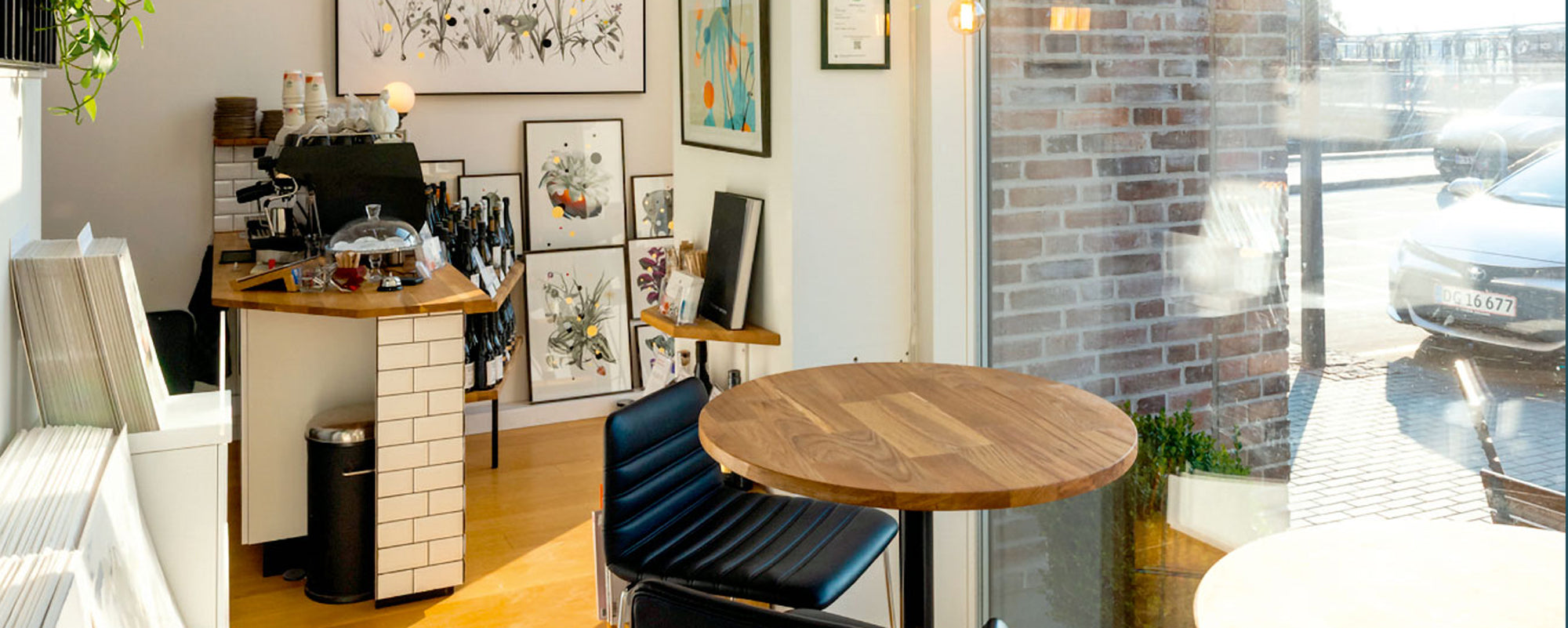
Distinctive art studio at Sluseholmen
There's a significant difference between viewing art on a screen and standing before it in person. In an art studio on Sluseholmen, you can feel the weight of the paper, the depth of the pigments, and the quiet precision in a work created with intention. This is precisely the difference many seek when the walls at home are no longer to be merely filled, but rather shaped.
In recent years, Sluseholmen has gained a unique appeal for people with an eye for architecture, tranquility, and well-chosen details. The area doesn't invite haste. Rather, it encourages immersion, making it an ideal location for a studio where art isn't presented as background noise, but as a tangible experience. When a studio, a gallery, and a more relaxed cafe atmosphere converge under one roof, a different kind of encounter with the artworks emerges. More human. More sensory. More precise.
What makes an art studio on Sluseholmen special?
The special quality isn't just in the address, but in how the place engages with art. A good studio is curated with discipline. This means the selection doesn't try to encompass everything. On the contrary. Each work, each series, and each finish is chosen with a clear aesthetic direction, so the experience feels cohesive rather than random.
For the design-conscious buyer, this is crucial. Art shouldn't just match a wall color or a coffee table. It should be able to hold its gaze over time. Therefore, materials, proportions, and surface are not secondary details. They are part of the work's character. A Giclée print on exclusive paper has a different presence than a standard poster. Canvas carries light differently. Hand-finished elements, such as gold leaf, don't just add exclusivity, but a subtle rhythm to the surface that only becomes apparent when viewed up close.
This is also where the studio model differs from a traditional gallery. A classic gallery can be formal and distanced. A pure webshop can be efficient but flat. A studio rooted in an atelier offers something in between – a kind of informal quality, where the works are still treated seriously, but without the conversation becoming stiff.
From wall decoration to visual identity
Many people buy art too late in the interior design process. First, the furniture is chosen, then the textiles, and finally, they try to find something for the wall that doesn't clash. The result is often pleasant but anonymous. The more interesting approach is to let art help define the room's identity from the beginning.
A strong piece can unify a room, create tension in an otherwise calm palette, or add warmth to a stark interior. This applies to private homes, workspaces, and hospitality environments alike. Especially in rooms with many smooth surfaces and controlled materials, art plays a crucial role. It adds resistance, texture, and personality.
Here, it's worth thinking in terms of series and format rather than isolated impulse buys. A limited edition with a signature and numbering speaks to a different kind of collector's consciousness than an open poster production. It doesn't have to be elitist. It's more about choosing something that feels lasting. Something with artistic integrity.
Materials that change the experience
When people say they want quality art, they often mean several things at once. They mean visual language, originality, and atmosphere. But they also mean materials, even when they don't say it directly. The choice of materials determines how a work ages, how it reflects light, and how it lives in a room through the changing hours of the year.
Fine art prints produced with high pigment quality offer a tonal depth rarely replicated in cheaper formats. This is especially important in works with many nuances, archival motifs, or collage-based compositions, where details lie in layers and transitions. On exclusive paper, the surface appears calmer and more precise. On canvas, the expression often becomes more painterly and physical.
However, there isn't one right choice. It depends on the room and the character of the work. Paper can be the most refined solution in a home with understated luxury and Scandinavian lightness. Canvas can add weight and presence in larger rooms where the work needs to carry across a distance. Hand-finished details work best when given space. They shouldn't compete with too much around them.
A studio is also a way of buying art
There are buyers who know exactly what they're looking for. And then there are those who only understand their own taste when they see it unfolding before them. A well-run art studio on Sluseholmen can accommodate both types, because the experience isn't just about transaction, but about clarification.
It matters to be able to see formats in reality. A work that seems modest online can have a surprising tranquility on a large scale. Conversely, a motif with strong graphic energy might work better in a smaller format, where the tension is kept close. These kinds of assessments are difficult to make alone in front of a screen.
The physical experience also makes it easier to sense the curation. Not just what is sold, but why. When a studio manages to combine poetic compositions, archive-based motifs, graphic transformations, and original works in a coherent atmosphere, the buying experience becomes more precise. You don't just choose an image. You choose a way of looking at the world.
When coffee, atelier, and gallery merge
There's something liberating about places where art isn't isolated from everyday life. A good cup of coffee might seem like a minor detail, but in practice, it changes the pace. It makes people stay a little longer, look a little closer, and think a little less strategically. It's often there that the best choices are made.
The combination of gallery, atelier, and cafe works when executed with uncompromising quality. If the cafe overshadows the art, the place loses its weight. If the art becomes too self-important, the human warmth disappears. The balance is delicate, but when achieved, a sensory sanctuary emerges where works can be experienced without filters.
It's also a model that suits a modern art audience well. Many don't want the old division between high culture and daily life. They want to encounter art in inviting, yet aesthetically rigorous, surroundings. This is precisely why the studio format makes sense in an area like Sluseholmen, where urban tranquility is already part of the place's character.
Who benefits most from a visit?
The obvious answer is the art buyer, but the field is broader. Those interested in homes often find works that can elevate an entire room. Creative professionals use such places as reference points for color, composition, and material understanding. For businesses and hospitality projects, a studio can be a place to find works with far more distinctiveness than standard solutions from contract catalogs.
There are also authors, publishers, and brands seeking visual identity with artistic depth. An atelier environment, where art, illustration, and design expertise coexist, creates a rare connection between the free and the commercial. This can yield strong results if the ambition is high enough. Not everything should look like branding. But branding can certainly have soul.
One name naturally associated with this way of thinking about a studio is StoltzeStudio, where curation, material awareness, and the atmosphere of the place are conceived as one complete experience.
How to assess if an art studio is right for you
The first sign is the quality of the selection. Not the quantity, but the precision. Do you see a clear hand in the curation, or does everything seem chosen to appeal to as many as possible? The second sign is the materials. Is the production executed with the same seriousness as the visual expression? And the third is the atmosphere. Does the place feel like a showroom, or like a space with real artistic roots?
Price, of course, also plays a role. Premium art is not for all budgets, and that should be stated honestly. But the relevant comparison is rarely between a limited edition print and a cheap poster. It's between something temporary and something you want to live with for a long time. When viewed this way, value becomes more than just a monetary amount.
If you're looking for an art studio on Sluseholmen, it's therefore worth seeking out a place where the work is not just a commodity, but the result of choices. Choice of paper. Choice of pigment. Choice of format. Choice of finish. And not least, choice of atmosphere. Because when art is allowed to be both precise and sensory, it isn't just hung up. It becomes part of how a room feels.
The best art doesn't necessarily draw the most attention. It lingers in the mind long after you've moved on.