Limited edition artworks with lasting value
There's a significant difference between filling a wall and giving it gravitas. This is precisely why limited edition artworks have found a special place among collectors, design-conscious homeowners, and creative professionals who seek more than decorative surface. When an artwork is published in a limited edition, it doesn't just change the availability of the piece. It changes the entire relationship between artist, object, and owner.
A limited edition piece carries a different kind of presence. The numbering makes the edition finite. The signature makes the release personal. And when the production is also based on materials of real quality – such as archival paper, canvas, pigment-based Giclée prints or hand-finished details – the work moves away from the fleeting and into something more enduring. For many, this is the difference between wall decor and art one chooses to live with for years.
What makes limited edition artworks special?
Limitation is only part of the answer. Exclusivity alone does not create quality. A work does not become interesting simply because there are few copies of it. The crucial factor lies in the interplay between artistic integrity, production, and edition logic.
When an edition is well-considered, the limitation becomes part of the work's form. The artist decides how many copies should exist, often based on format, technique, and intent. A smaller edition can emphasize the work's rarity, but it can also increase its price. A larger edition can open it up to more buyers without necessarily diluting the work's value, if the quality and curation are intact. It depends on how the edition is created and presented.
This is also where material selection becomes crucial. A motif printed on exclusive paper with depth, tactility, and color stability feels significantly different from a standard print produced for volume. The surface, the way light hits the pigment, and the weight of the paper are not minor details. They are part of the work's language.
Limited edition artworks versus open edition
For the quality-conscious buyer, the difference is significant. Open edition means the work can be reproduced without a fixed limit. This makes the format more accessible, but also less defined as a collectible. An open edition print can be beautiful, relevant, and well-produced, but it rarely carries the same sense of bounded ownership.
Limited edition artworks, on the other hand, create a clear framework for the life of the work. If an edition is 25, it is 25. This limitation gives the work a different weight, both emotionally and commercially. You don't just buy a picture. You buy a specific placement in a completed body of work.
This does not mean that limited edition is always the right choice. If the focus is primarily visual impact in a larger project, an open edition may be more practical. But if the desire is to invest in something with a distinct artistic signature, a higher degree of rarity, and a more personal connection, limited edition is often the stronger solution.
What to look for before buying
The first question is simple: Is the edition clearly defined? A serious limited edition artwork should have clear information about the size of the edition, numbering, and signature. Preferably also about the printing method, paper type or canvas quality, and any hand-finished details. The more transparent the production, the easier it is to assess the work's true level.
Next comes the question of finish. A work can be visually strong digitally, but lose its authority if the execution is flat or imprecise. Conversely, a refined print with pigment depth, precise color management, and a tactile surface can elevate even a quiet composition to something remarkable. In the premium segment, finish is not a bonus. It is a prerequisite.
Size also matters more than many believe. A smaller work in a low edition can feel intimate and concentrated, while a larger format can take on an almost architectural function in the room. It's not about bigger always being better. It's about proportion, light, and the atmosphere the work should create.
Materials that make a difference
When discussing high-level edition art, materials are not just technique. They are part of the work's aura. Giclée prints with archival inks are popular for a reason. They provide a richness of color and precision that comes closer to the nuances of the original, while also offering high durability. On exclusive cotton paper or textured fine art paper, the motif gains a calm and depth that standard posters rarely can deliver.
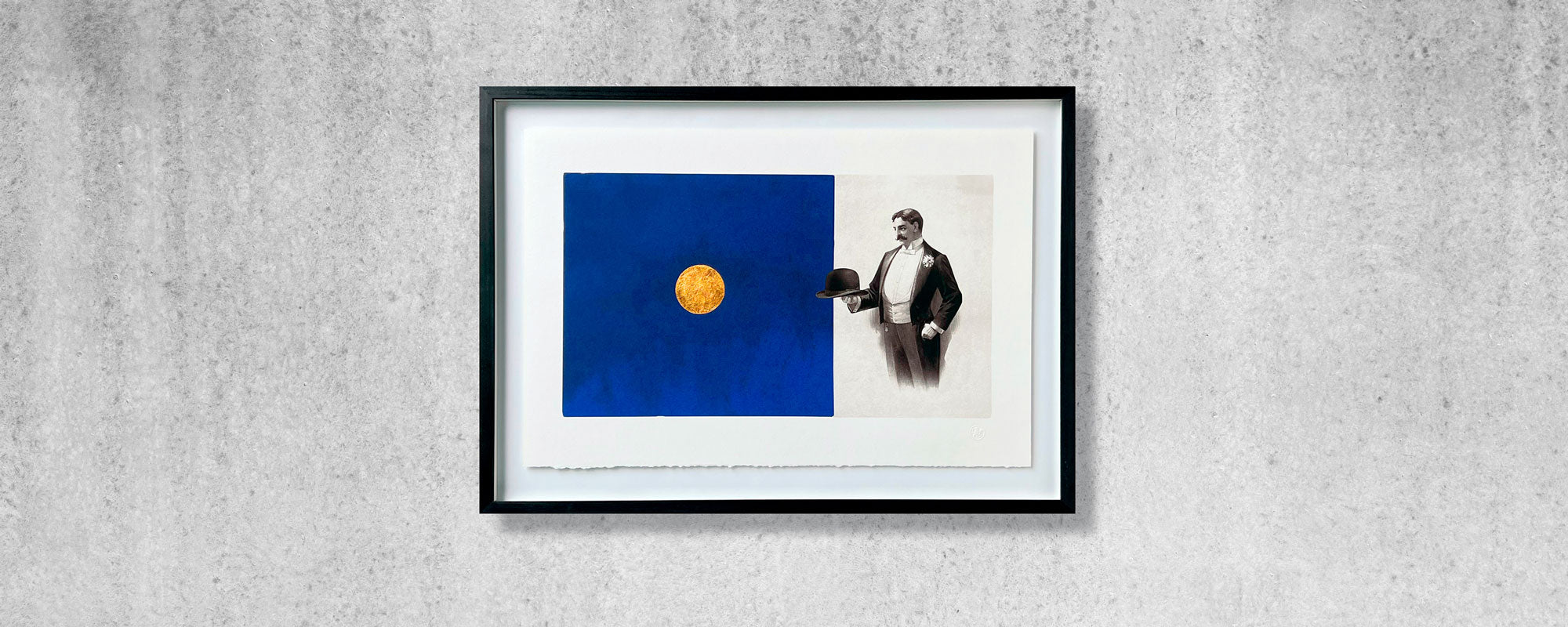
Canvas can add a more painterly character, especially when the surface is treated with hand-applied details. This could be gold leaf, brushwork, or other manual interventions that make each copy subtly different. It's an interesting tension: the edition is limited, but the individual piece still has its own life.
For buyers with an eye for interior design, this is a significant quality. The work functions not only as a picture, but as a material object. It must be able to dialogue with stone, wood, textile, brass, glass, and daylight. This conversation only arises when the surface has substance.
How limited editions affect a space
There is art that demands attention, and art that refines a space over time. The most successful limited edition artworks can often do both. They have enough visual strength to define a wall, but also enough complexity to keep giving something back.
In private homes, limited editions often create a more personal atmosphere than mass-produced prints. Not because they are necessarily more dramatic, but because they feel more deliberate. There is a consciousness in the choice. It can be felt.
In workspaces, hospitality environments, and reception areas, edition works have another advantage. They signal taste without appearing standardized. For brands, hotels, or clinics that desire tranquility, character, and cultural weight, a curated selection of limited editions can provide precisely the balance between exclusivity and accessibility that many spaces demand.
Are limited edition artworks an investment?
Sometimes yes, but it's rarely the most interesting starting point. Art should not be bought like a spreadsheet. It should be bought with an eye for quality, originality, and lasting appeal. That said, limited editions can have a stronger potential for value retention than open editions, especially if the artist has a clear practice, a consistent visual language, and high-standard production.
However, a low edition size is not enough. If the motif is weak, the materials mediocre, or the edition unclearly communicated, the limitation itself will not create value. The market does not reward accidental scarcity. It rewards compelling works.
For the experienced buyer, investment therefore often comes down to discernment. Which works continue to be relevant in a room? Which materials age beautifully? Which artists work with consistency rather than trend-sensitivity? These questions are more fruitful than quick expectations of returns.
When curation means more than hype
Perhaps the most attractive aspect of limited editions is not their rarity, but the care they invite. One chooses slower. One looks closer. One inquires more about process, paper, colors, edition, and signature. This is a healthy movement in an age where images are often consumed quickly and forgotten even faster.
Therefore, it makes sense to buy from a studio or art practice where edition work is an integrated part of the overall universe. When the works are created with a sense of composition, materiality, and uncompromising craftsmanship, the edition becomes more than just a sales format. It becomes a discipline. At StoltzeStudio, it is precisely this fusion of atelier, curation, and sensory production that makes limited editions more than reproductions.
The best purchase is rarely the loudest. It is the work you return to. The one that naturally fits into the space and simultaneously elevates it. If a limited edition work can do that, it has already proven its value long before the market does the same.