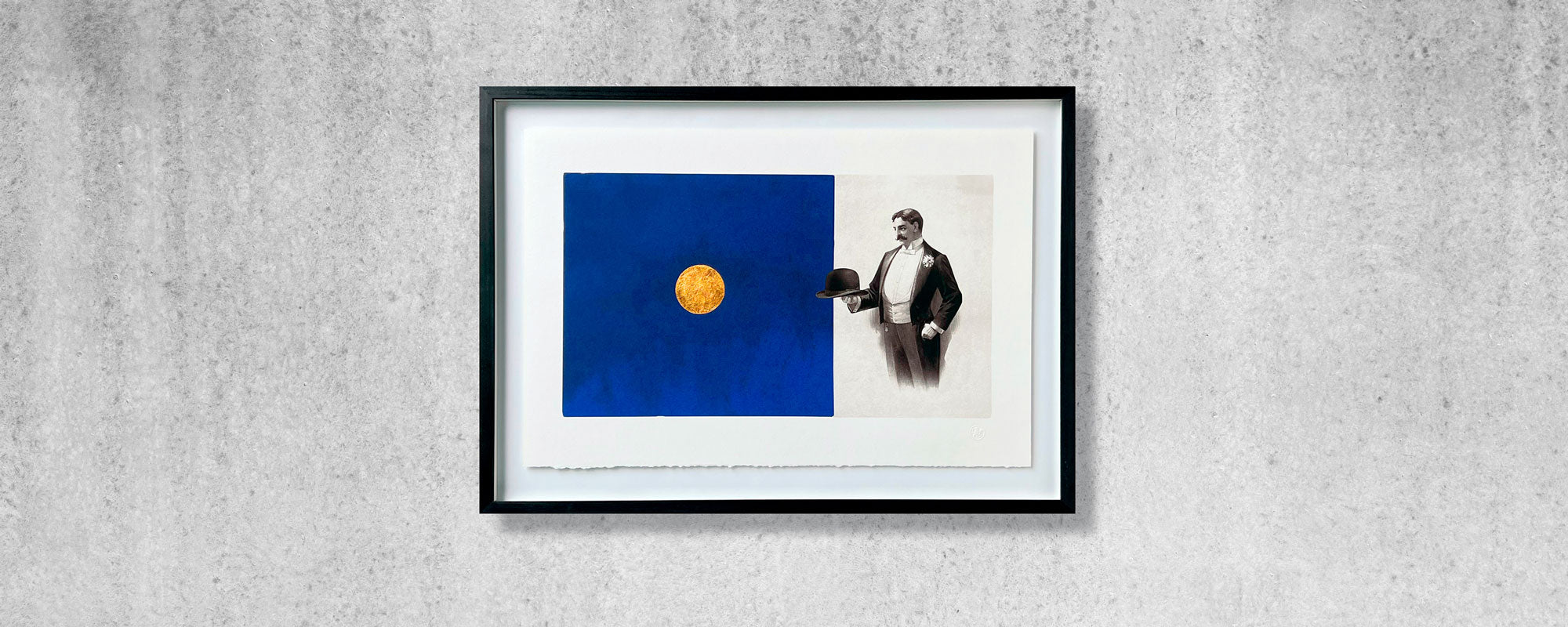
Signed and numbered art print - what are you buying?
A work can be printed and still feel rare. This is precisely the difference when you hold a signed, numbered art print in your hands – you feel that the image is not merely reproduced, but published with intention, limitation, and artistic responsibility. For the design-conscious buyer, this is not a technicality. It is an essential part of the work's identity.
Many people use the terms art print, poster, and limited edition interchangeably. This creates confusion, especially when the work is meant to have a real place in the home, collection, or a professional environment. A signed and numbered print occupies a different space than mass-produced wall decor. It's about the size of the edition, the quality of the print, the artist's approval, and the tactile experience of the material.
What is a signed, numbered art print?
A signed, numbered art print is a work produced in a limited edition, where each copy is assigned its own number and is typically signed by the artist. When it says 12/50, it usually means you are looking at print number 12 out of a total edition of 50.
This notation sounds simple, but it carries great significance. The numbering indicates that the edition is fixed and defined. The signature indicates that the work has been approved as part of the artist's official release. Together, they create a kind of intimacy between the work and the collector that an open edition does not.
It is also worth distinguishing between the motif itself and the specific edition. The same motif can, in principle, exist as an ordinary poster, as an open print series, and as a limited edition on museum paper. Therefore, it is not enough to ask if you like the image. You should also ask which version of the image you are looking at.
Why the edition matters
The edition is not just a matter of exclusivity. It shapes the entire character of the work. A small edition often feels more intense, more decisive, and more curated. The artist has made a choice that the work should exist in a measured number of copies, not indefinitely.
For the buyer, this means several things. On the one hand, there is a clearer sense of rarity. On the other hand, one acquires a work with greater integrity in the market, because the edition is not limitless. This does not automatically make the print an investment, and it is important to be honest about that part. Value depends on the artist's position, demand, documentation, and quality over time. But the logic of editions creates a more serious starting point.
There is also an aesthetic dimension. When a work is published in a limited edition, greater care is often taken with the production. Paper choice, pigments, color management, and finish are typically considered part of the work's overall expression, not just a practical printing solution.
The role of the signature is more than symbolic
A signature does not in itself add quality if the print is otherwise mediocrely produced. But in the right context, the signature is an important layer. It acts as the artist's final handshake. Not as decoration, but as confirmation.
Some signatures are written in pencil in the margin, others directly in the image field, and some are accompanied by a year or edition information. The placement is significant for the visual expression. A discreet pencil signature in the white border often appears more classic and collector-oriented, while an integrated signature in the work can feel more graphic and contemporary.
The crucial point is not just that a name is there. The crucial point is that the signature naturally forms part of a well-conceived publication. If everything else about the print seems anonymous or standardized, the signature will not save the whole.
Materials make the difference
When talking about a premium art print, the paper is never a trivial matter. A well-produced giclée print on acid-free cotton rag or other exclusive fine art paper has a depth and tranquility in its surface that is difficult to confuse with cheaper alternatives. Colors appear more nuanced. Dark tones gain weight. Light areas gain airiness.
The same applies to prints on canvas, where texture and tension over a stretcher bar create a different presence. Here, the experience depends on the motif. Some works benefit from the matte sophistication of paper, while others gain a more physical presence on canvas. It is not a question of right or wrong. It is a question of how motif, surface, and space interact.
Hand-finished details can elevate the work further, if used with discipline. Gold leaf, painted interventions, or small variations between copies give the print a more studio-rooted character. But such details must be meaningfully executed. Otherwise, the effect becomes decorative in the wrong way.
What to look for before buying
A signed, numbered art print should be able to withstand closer scrutiny. Start with the edition information. Is the edition clearly stated? Is it clear whether the edition is closed? If there are multiple sizes, you should also know whether each size has its own edition, or if the total edition is distributed across them.
Then look at the printing method. Giclée prints are often preferred because pigment-based inks and high resolution can reproduce nuances very precisely. But the technique alone is not enough. Paper quality, color control, and the integrity of the image file itself are equally crucial.
Also, inquire about the signature and numbering. Are they handwritten? Does it come with a certificate? A certificate is not always necessary, but in many cases, it provides extra clarity. Especially if the work is to be given as a gift, included in a collection, or displayed in a professional environment where provenance matters.
Signed numbered art print versus poster
The difference between a signed, numbered art print and a poster lies not only in price. It lies in intention. A poster is often created for wide distribution. It can be beautiful, well-printed, and perfectly suitable in many contexts. But it is rarely conceived as a limited artistic release.
A numbered art print is more akin to a work of art than a decorative product. This is especially true when the motif is produced as a fine art print from the beginning and not merely upgraded in its marketing. Here, you notice the difference in the details – in the weight of the paper, in the stillness of the colors, in the margin, in the signature, in the way the work occupies space on the wall without shouting.
This does not mean that all homes need limited editions. Some rooms call for lightness and flexibility, and there, a poster can be the right choice. But if you want a work with more durability, more substance, and more artistic weight, you should look for a different category.
How a signed, numbered art print works in interior design
In a well-composed room, the best works do more than fill an empty wall. They create rhythm, calm, and direction. A signed, numbered art print can do precisely that, because it often has greater visual concentration than standard prints. You don't just see the motif. You also see the materiality.
In private homes, this type of artwork works particularly well where one desires a more personal and mature expression – above a sideboard, in an entryway with architectural character, in the bedroom, or in a quiet corner that serves as a sensory breathing space. In hospitality and office environments, it adds credibility. Not as a status symbol, but as a sign of curation.
Choose size carefully. A small edition in a large format can feel significant and collectible, but requires space around it. Smaller formats can seem intimate and sophisticated, especially if the framing is precise. Frame choices should support the work, not overpower it. Wood, oak, ash, or a sleek aluminum profile often work better than overly ornate solutions.
When price and value are not the same
It's tempting to ask if a signed and numbered print is worth more. The answer is yes and no. Yes, because the limited edition, signature, and material quality typically place the work higher than an open print. No, because market value can never be reduced to a single factor.
Some buyers look for collectible potential. Others look for a work they will live with for many years. Both motivations are legitimate, but they lead to different choices. If your primary goal is aesthetic quality, you should buy with your eyes first and edition data as support. If your goal also includes value considerations, you need to pay more attention to the artist's practice, consistency, and documentation.
At StoltzeStudio, limited editions make particular sense when craftsmanship, paper, and artistic distinctiveness are conceived as one complete experience. This is where the print moves away from reproduction and closer to a work of art.
A good purchase rarely feels like a compromise between beauty and substance. It feels like precision – as when motif, material, edition, and space suddenly fall into place, and the wall is no longer just empty, but becomes part of the narrative.