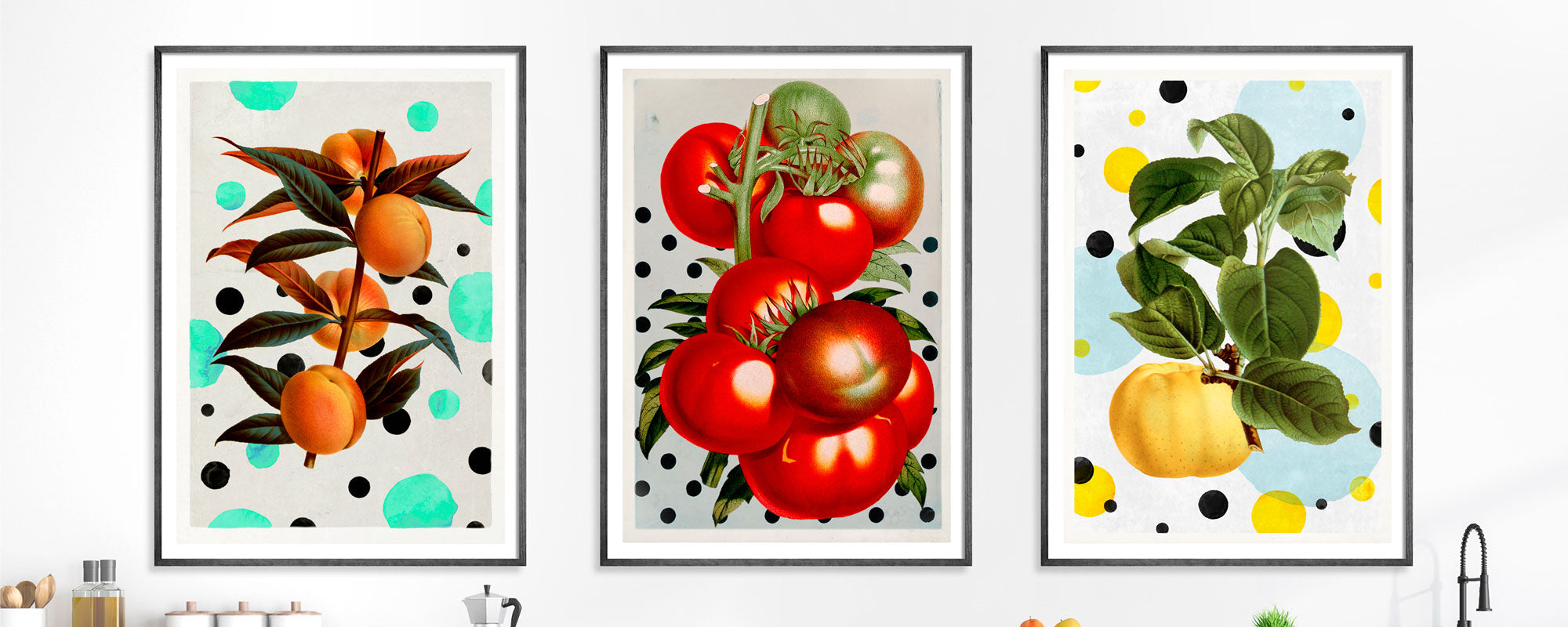
Premium art posters online with substance
It's immediately noticeable when a wall has been chosen with care. Not because the room shouts louder, but because it settles down. When searching for premium art prints online, one rarely looks for just something pretty. One looks for works with substance, materials with presence, and an aesthetic that can carry a room for years without losing its appeal.
This is precisely where the difference between decorative wall art and true artistic curation arises. A strong art print doesn't serve as filler. It creates rhythm, provides a counterpart to light and shadow, and imbues the home with a visual intelligence that is felt long before it is put into words.
What characterizes premium art prints online?
The word 'premium' is often used too lightly. In the art world, it should mean something concrete. First and foremost, it's about the quality of the reproduction itself. Colors must have depth, black tones must be rich without closing off the image, and subtle transitions must be precise. A motif with poetic compositions or delicate archival tones quickly loses its character if the print is flat or mechanical.
The paper is just as crucial. An exclusive fine art paper has a tactility that transforms the entire experience of the artwork. The surface can be soft, almost velvety, or more structured and tactile. Both can be right - it depends on the character of the motif. Collages, photographic transformations, and layered works often benefit from a paper that can carry complexity without becoming heavy.
Furthermore, 'premium' lies in limitation. Limited editions, numbering, and signatures do not automatically create quality, but they emphasize that the work is intended as more than mass production. When a print is released in a limited edition, the relationship between artist, work, and collector becomes more precise. It offers a different kind of ownership.
When online purchases require a sharper eye
Buying art digitally requires more discernment than buying it in a physical space. The screen easily seduces. It smooths out textures, enhances contrasts, and often conceals the difference between a quick standard print and a meticulously crafted giclée art print.
Therefore, product descriptions should be read like a collector, not an impulse buyer. What printing method is used? Is the paper quality specified? Are they open editions or limited editions? Are hand-finished details mentioned, or is everything reduced to the motif alone? If the information is vague, it's rarely a good sign.
The visual material also matters, but not in the way many think. Large, atmospheric photos are fine, but they should be accompanied by close-up shots that show the paper's surface, the nuances of the colors, and any finish details. A work with 24-karat gold leaf, texture layers, or canvas should be viewable up close. Otherwise, you're buying blind.
Materials that elevate the experience
The best premium art prints online are not chosen solely based on the motif. They are chosen in the interplay between image and material. Giclée printing is a prime example, because the technique can reproduce high levels of detail and subtle tones with a precision that is closer to the original work's intensity than ordinary poster prints.
Canvas can add a more painterly presence, especially if the motif has tactile qualities or works with depth and movement. Fine art paper, on the other hand, often provides a sharper, more refined reading, especially for photographic motifs, collages, and graphic compositions. One is not superior to the other. It depends on whether one desires an expression with calm precision or more bodily fullness.
Hand-finished details are a chapter in themselves. Gold leaf, manual texture layers, or small variations from print to print add a unique character to the work. Here, the art print moves away from pure reproduction and into a more studio-anchored field, where each copy bears traces of craftsmanship. For the design-conscious buyer, it is often precisely this difference that makes a work worth living with.
Curation is more important than selection
Many online art shops offer thousands of motifs. That sounds generous, but often feels like noise. A truly strong selection is curated with discipline. There must be a clear hand behind the choices, an aesthetic integrity, and an understanding of how works communicate across series, colors, and materials.
Curation makes it easier to choose correctly, because as a customer, you sense a direction. Not a trend hunt, but an artistic standpoint. It's the difference between scrolling through randomness and encountering a cohesive world where every work has already been integrated into a larger narrative.
For interior design, this means more than one might think. A curated universe builds confidence that the artwork can integrate into the home with the same naturalness as it functions alone. This is especially true in rooms where tranquility is desired - living rooms, bedrooms, offices, or hospitality environments with ambitions for more than just a pleasant atmosphere.
How to choose art prints for a refined home
The first question isn't which color matches the sofa. It's what mood the room lacks. Some rooms need contrast. Others need silence. A work with dark depth, an archival feel, or dramatic collage layers can give an otherwise neutral room character. A lighter motif with open spaces and poetic balance can unify a room that already contains many materials and objects.
Size should be chosen with courage. Many people buy too small online, because the dimensions seem larger on screen than in reality. A premium work should have presence. Not necessarily monumental, but clear. If a motif is to carry a wall alone, it needs space around it and enough format to be read from a distance.
Frames are not a minor detail either. A good frame extends the language of the artwork. Natural wood often emphasizes warmth and tactility. Black creates graphic precision. A more discreet framing can be right if the motif already has many layers. There is no single correct solution, but there are many compromises that weaken a strong work.
Premium art prints online for more than private homes
It's not just private collectors who seek premium art prints online. Creative offices, boutique hotels, restaurants, and reception areas are increasingly using curated art as part of their identity. Here, the difference between standard decoration and thoroughly developed visual culture is particularly evident.
In professional environments, art must do more than look good from a distance. It must support the atmosphere, signal taste, and withstand repeated glances. Works with tactile depth, limited editions, and a clear artistic signature add credibility to the space. This is especially true in places where guests and clients expect a high aesthetic standard.
Therefore, many also choose works that are not only beautiful, but also characterful. Something with tension. Something with resonance. It is rarely the most generic motifs that one remembers.
What is worth paying for
Premium doesn't mean that the most expensive is always the best. But there are certain things that are worth investing in. Print quality is one of them. Paper and pigments are another. Edition logic, signature, and hand-finishing can also justify a higher price, because they add rarity and substance to the work.
This doesn't mean that everyone should buy limited editions with special finish details. If you fall in love with an open edition with strong visual power and exceptional production, it might be the right choice. It depends on whether you are buying to start a collection, to create cohesion in your home, or to find one work that transforms a room.
At StoltzeStudio, this uncompromising approach is part of the entire artwork experience – from curated fine art prints to hand-finished details that give each motif a more sensory presence.
There's a special satisfaction in choosing slowly. To let the eye return to the same work several times. To feel if the image continues to reveal itself. That's often where the right purchases arise. Not as quick impulses, but as quiet decisions with a long lifespan.
When you choose art for your walls, you also choose what the room should say when no one is speaking. Therefore, choose works that can continue to respond.