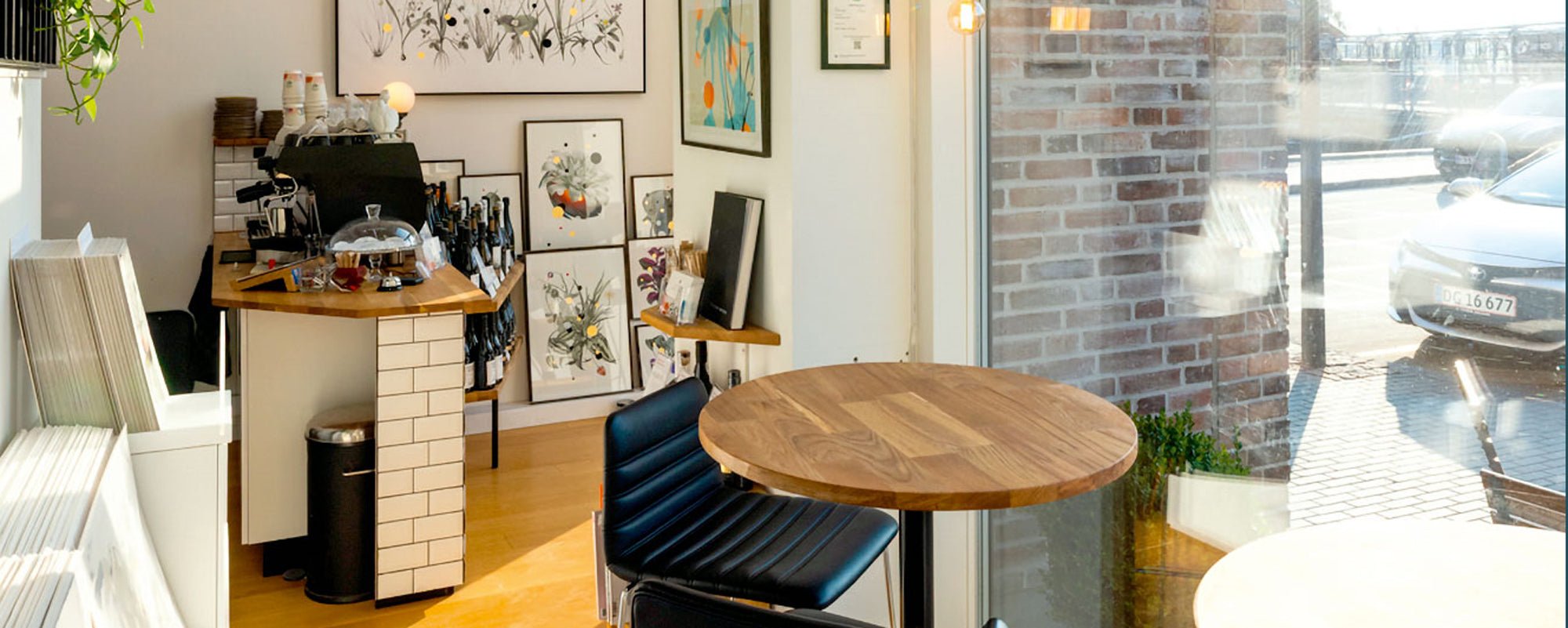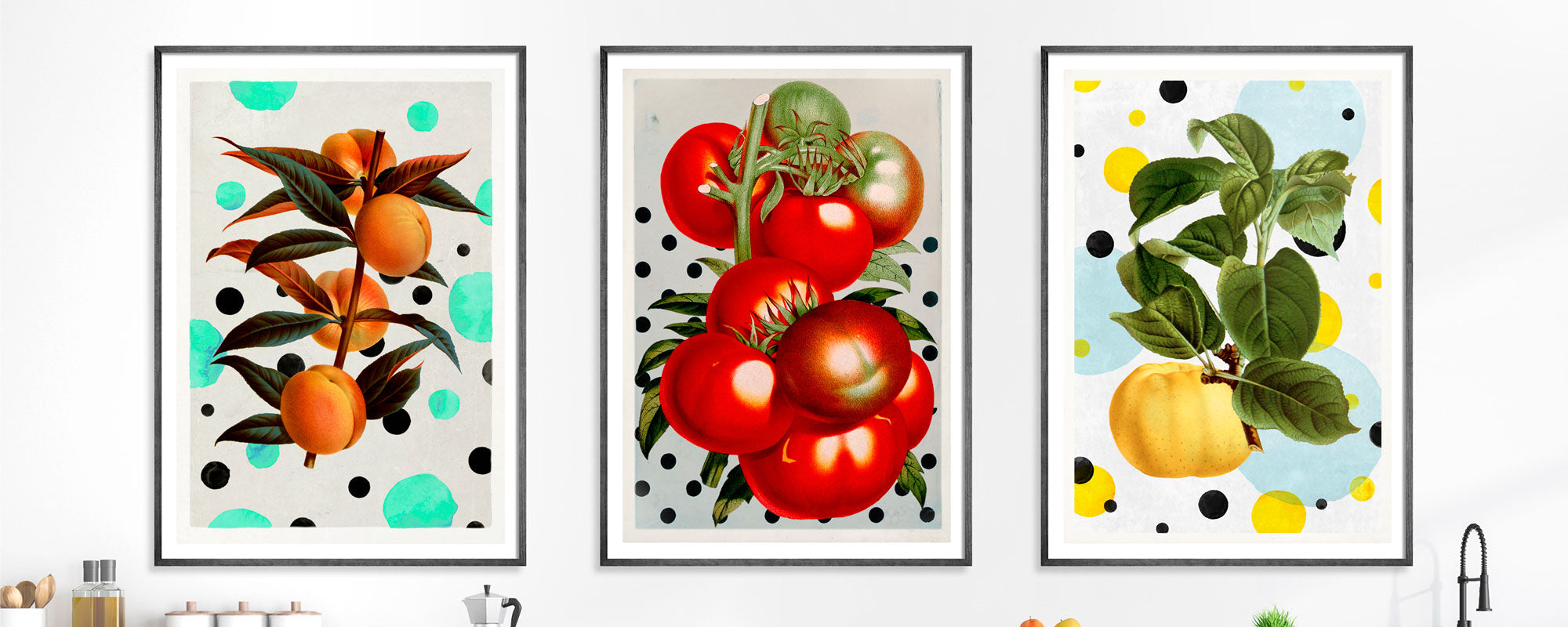
Studio with art exhibition - why it works
There's a significant difference between seeing art hung on a wall and encountering it where it's created. An artist's studio with an exhibition has a peculiar weight, because the space bears traces of the process – pigment, paper, proofs, silence, choices. For the design-conscious buyer, it's not just a more intimate way to experience art. It's often the most accurate.
When works are presented in the studio's own atmosphere, the distance between idea and finished piece diminishes. You don't just see the motif, but also the discipline of the materials, the artist's decisions, and the curated context in which the work exists. It changes one's perception. And often, the purchase too.
What an artist's studio with an exhibition can offer, that a classic gallery sometimes cannot
A traditional gallery has its own strengths. The neutral space can give the artwork room to breathe and authority, and the institutional setting can sharpen focus. But an artist's studio with an exhibition offers something different – a more direct contact with the work's origin.
Here, the space is not intended as a blank backdrop. It's an active part of the experience. Table surfaces, materials, working light, and sketch fragments serve as silent witnesses to the artistic process. For many collectors and aesthetically conscious interior designers, it is precisely this proximity that builds trust. Not as a sentimental narrative, but as visible proof of quality and intention.
This is especially true when the works are produced with a high material consciousness – for example, Giclée prints on exclusive paper types, limited editions, or works with hand-finished details. In a studio environment, the difference between standard production and uncompromising craftsmanship becomes clearer. The surface speaks more distinctly. The weight of the paper is felt. The finish achieves tranquility.
When art is given a sensory framework
The best exhibitions are remembered because they create an atmosphere where the artwork can emerge without noise. In a studio, this atmosphere often arises more naturally than in highly polished exhibition spaces. It's not about randomness, but about authenticity.
An artist's studio with an exhibition can be a sensory haven because the experience is more holistic. The colors in the artworks respond to the materials of the room. Textures in paper, canvas, or gold leaf are not reduced to visual effects, but are experienced as part of the work's physical presence. This is particularly important for art that works with layers, collage, transformation, and subtle transitions in tone and light.
For those decorating a home or a hospitality environment with ambition, this experience is valuable. A work is rarely chosen based on motif alone. It is also chosen based on scale, materiality, reflection, edge, serenity, and the ability to live in a space over time. That assessment becomes simpler when encountering the work in an environment where materiality is not hidden, but highlighted.
Curation matters more than many think
A studio isn't automatically interesting just because it's a workspace. Without conscious curation, it can become too private, too cluttered, or too unfocused. Therefore, the difference between a casually open workshop and an actual artist's studio with an exhibition is significant.
Curation is the link that transforms process traces into an experience. It's about how works are put into dialogue, how formats are balanced, and how the space allows the eye to move between the finished and the exploratory. In a strongly curated studio, nothing is over-explained, but everything appears deliberate.
This is also where the premium segment stands out. Clients seeking originality and visual sophistication rarely respond to overcrowded walls and quick fixes. They respond to precision. To series of works with internal coherence. To edition logic. To the quiet self-assurance that arises when a work doesn't have to fight for attention.
For a brand like StoltzeStudio, precisely this synthesis between studio, exhibition, and sensory destination is central. Not merely as a conceptual approach, but as a way to give art the right resistance and the right warmth.
Why the process makes the work stronger
There is art that should stand without biography surrounding it. And there is art that grows when the process becomes visible. Neither is more right than the other. But in a studio environment, it becomes clear how much the process actually means for the character of the work.
For example, a print is not just a print. There's a difference between standard offset and a museum-quality Giclée print. There's a difference between matte and vibrant surfaces. There's a difference between an open edition and a signed, numbered edition. And there's especially a difference in a work where hand-finished details add variation and presence, giving each copy its own pulse.
When you see these differences in an artist's studio with an exhibition, the choice becomes less abstract. It's no longer just about price or size, but about relation. You understand better what you're taking home, and why it has value beyond the decorative.
A space between art, design, and life
One of the most interesting aspects of this exhibition format is that it places art closer to everyday life without making it commonplace. It's a delicate balance. If the space becomes too lifestyle-oriented, the artwork loses its tension. If it becomes too solemn, the audience loses its immediate access.
The successful studio finds a point in between. Here, art can coexist with design objects, coffee, conversations, and slow presence, as long as the quality of the presentation is maintained. For many visitors, it makes the experience more precise, not less. You see the works in a context that resembles how they will later live – in private interiors, in workspaces, in places with rhythm and human use.
This is also why this type of space appeals so strongly to people who work with interior design, branding, or visual culture. They rarely think of art as an isolated object. They think in wholes. In atmospheres. In how a work can carry a room without dominating it.
Who benefits most from an artist's studio with an exhibition?
The obvious visitor is the curious art buyer, but the target audience is broader than that. The experienced collector gains access to more nuances in production. The design-interested homeowner can assess materials and scale with greater certainty. The creative professional can read the visual method behind the works and understand why some compositions continue to endure.
At the same time, this setting is ideal for those who feel less at home in classical art institutions. Not because the studio is less demanding, but because it is often less ceremonial. One can enter with their own taste, their own doubts, and their own questions. This allows for more honest conversations about the role of art in a life and a space.
However, there is also a trade-off. Those who desire complete distance between work and creator may find the studio format too intimate. Some prefer art to stand entirely alone, without traces of the work process. This is a legitimate preference. Precisely for this reason, an artist's studio with an exhibition is not a universal solution, but a special form that works best for those who appreciate the connection between hand, material, and space.
What to notice as a visitor
If you want to get the most out of the experience, it's worth looking beyond the motif. Notice the surface of the paper, the depth of the print, the precision of the edges, and the balance between series and individual works. Observe how light hits different finishes and how the works change character as you approach them.
It's also worth feeling how the space affects the reading of the artworks. Does the presentation feel well-thought-out? Is there tranquility around the works? Do the materials and decor support the artistic expression, or do they compete with it? The best studio exhibitions never feel like a backdrop. They feel like a natural extension of the works.
For many, this experience itself becomes crucial. Not a quick purchase, but a more qualified decision. You don't just take a picture home. You choose a work whose materiality, format, and mood have already shown that it can live close to you.
A good artist's studio with an exhibition therefore offers more than access to art. It offers access to discernment. And that is perhaps the most luxurious quality of all.