7 examples of art for a boutique hotel
A guest forms an opinion of a boutique hotel before the key card reaches their hand. This happens in the light of the entrance, in the weight of the materials, and in the first artwork the eye encounters. A well-thought-out example of art for a boutique hotel is therefore not just a beautiful wall. It is a precise part of the hotel's identity - a visual invitation to slow down, become curious, and remember the place after their stay.
Art in hospitality environments must do more than fill a surface. It must withstand repeated encounters, function in changing daylight, and speak to both the guest who spends two minutes in the room and the one who stays for a week. The strongest curation balances artistic integrity with spatial tranquility.
Examples of art for boutique hotels with unique character
There is no one universal art direction for a boutique hotel. A historic city hotel, a coastal destination, and an intimate design hotel with a restaurant have vastly different needs. But seven approaches show how art can become a core part of the experience rather than a decorative afterthought.
1. A signature piece in the lobby
The lobby needs a piece with presence from a distance. This could be a large poetic collage, a graphic motif with significant depth, or a limited edition print with hand-finished details in gold leaf. Here, the artwork is welcome to set the tone immediately, but it should not overpower the architecture, reception, or human activity in the room.
Choose a format that has physical authority. A small piece above a large sofa often looks timid, while a generous format unifies the space and provides guests with a natural focal point. In lobbies with many hard materials such as stone, glass, and metal, paper artworks with a tactile surface can add the necessary warmth.
2. A series connecting the hallways
The hotel corridor is a transitional space, but it doesn't have to feel anonymous. A coherent series of prints can create rhythm, especially when the motifs share a color palette, format, or compositional principle without being identical. Think of the series as a quiet narrative that unfolds step by step.
Here, medium-sized works often function better than one dominant motif. Guests pass by closely, and details are welcome to reward a slower glance. Archival motifs, abstract landscapes, or transformations of botanical forms can create a sense of movement without making the hallway visually restless.
3. Erotic? No - sensual works in the suites
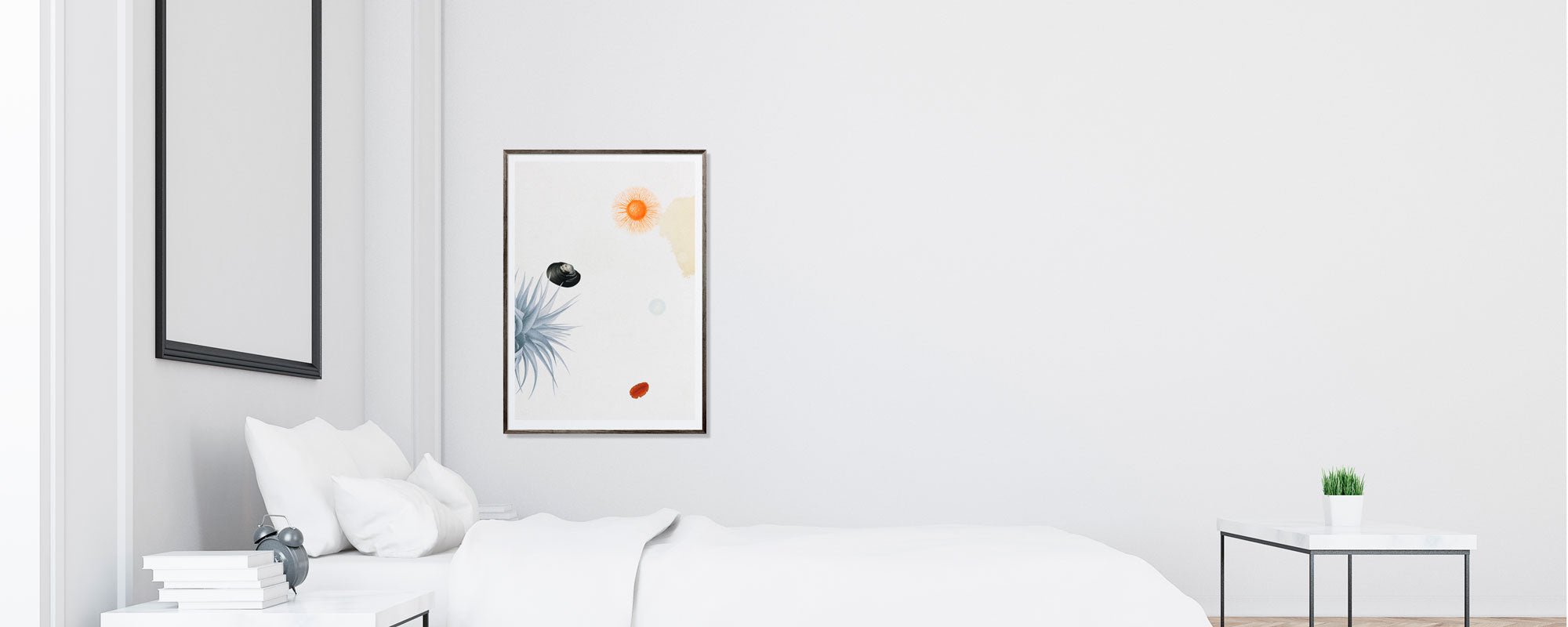
A guest room is not a gallery, and the art should not require an explanation to be effective. It should give the room its own atmosphere, but at the same time leave space for the guest's private stay. Sensual, layered compositions with muted tones, organic forms, or suggestive landscapes are often stronger than purely illustrative motifs.
This doesn't mean the art should be anonymous. On the contrary, an original work or a signed fine art print can add that special feeling of staying in a place that has chosen with care. The crucial factor is the dosage. In a compact room, one work with a clear position can be more convincing than three small, random pictures.
4. Art by the bed that tolerates proximity
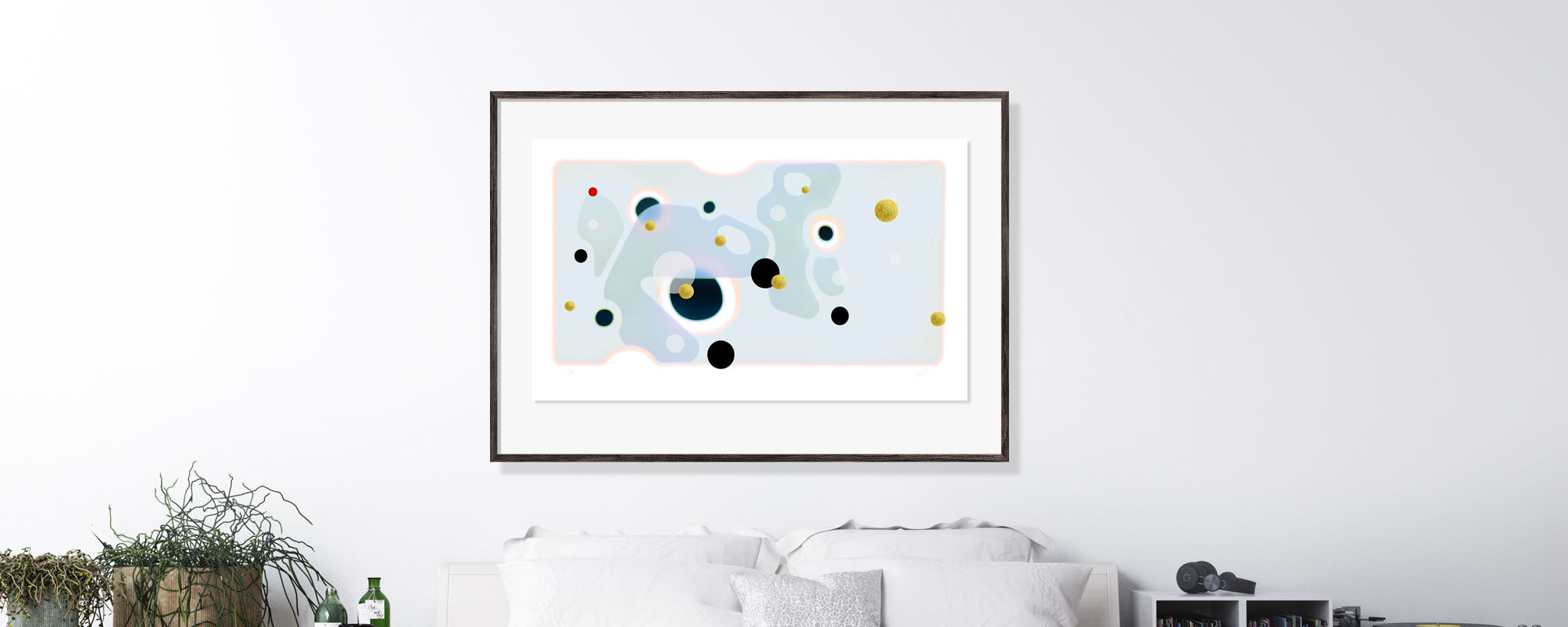
The artwork above the headboard is seen both in daylight and from a pillow in evening lighting. Therefore, the colors should be calm, and the motif should be able to accommodate multiple interpretations. A Giclée print on exclusive paper can have a deep, almost textural quality that is particularly well-suited to textiles, wood, and soft wall colors.
Avoid very glossy surfaces directly above the bed if the room has spotlights or reading lamps. Reflections can diminish the experience and make an otherwise elegant motif difficult to see. Museum glass or a matte finish can be an investment that is appreciated every single evening.
5. The local perspective without postcard aesthetics
Guests often desire a connection to the destination, but this doesn't have to mean black-and-white photographs of famous landmarks. A more refined approach is to let the place live in materials, colors, and motifs. Copenhagen, for example, can be hinted at in the grey-blue shifts of the water, the geometry of the harbor, a Nordic winter sky, or in graphic traces of the city's architecture.
This indirect local anchoring gives the hotel character without becoming predictable. It also speaks to international guests who seek an experience with local sensibility rather than the recognizable motif world of souvenirs.
6. Art in restaurants and bars with more energy
While rooms call for tranquility, restaurants, bars, and coffee environments can welcome more excitement. Here, colors can be deeper, contrasts clearer, and compositions more social in their energy. The role of art is to extend conversations and support the atmosphere that arises between glasses, music, and subdued lighting.
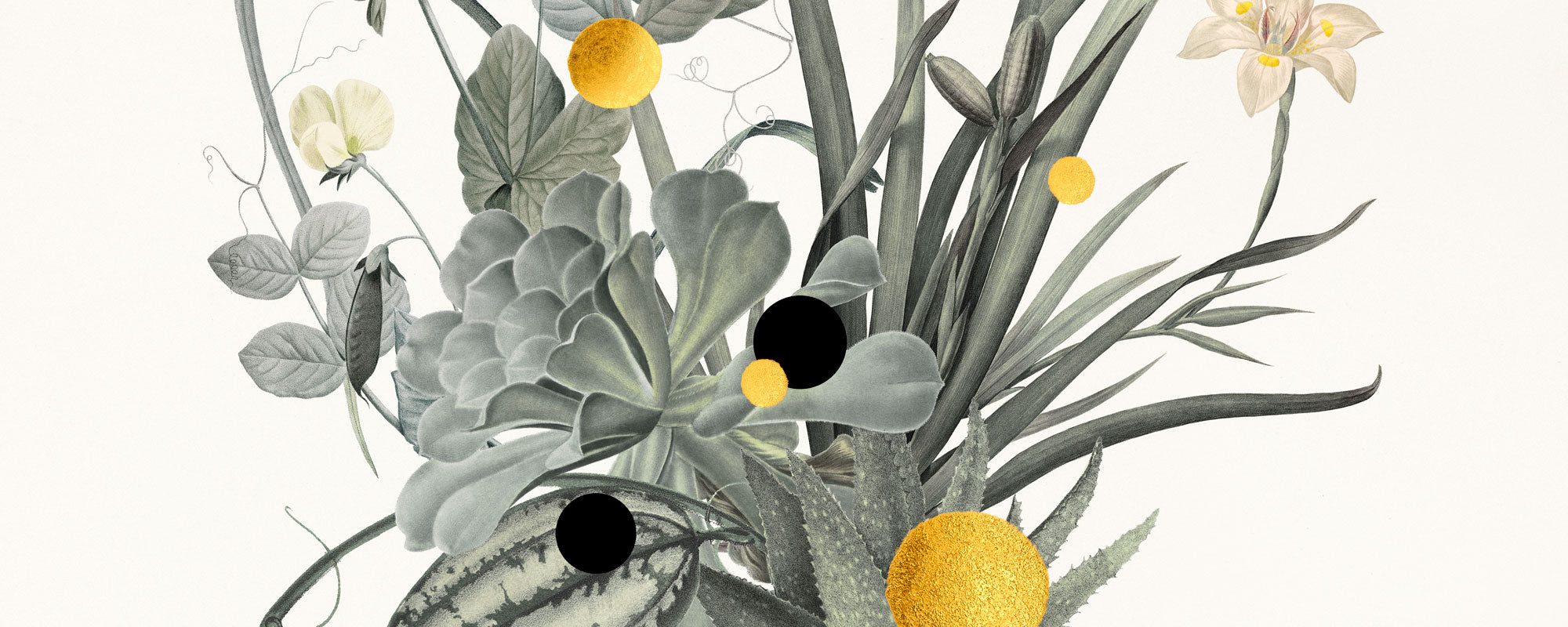
However, do not choose works solely based on whether they look dramatic from a distance. In a room where guests linger, it becomes crucial that the images continue to have depth. Collages with shifted layers, hand-worked surfaces, and small unexpected elements often possess this quality. They continue to reveal themselves.
7. Small, original encounters in overlooked spaces
Guest restrooms, elevator lobbies, staircases, and small seating areas are ideal places for works that are more intimate or experimental. Here, a smaller original work, a numbered edition, or a simple illustrative composition can create a moment of intimacy. It is precisely in the rooms where guests expect nothing that the curation can feel most personal.
Small works should still have a clear frame and deliberate placement. A narrow wall does not automatically gain strength from a small picture. Work with center height, wall proportions, and light fall, so the artwork has its own tranquility around it.
How the hotel chooses the right artistic direction
Before selecting works, the hotel should articulate what the guest should feel. Is the experience urban and graphic, warm and tactile, or characterized by an almost meditative simplicity? This decision is more useful than a vague idea that the art should be modern or luxurious.
Next come the materials. Cotton paper, canvas, wooden frames, pigment prints, and hand-applied details send different signals. A fine art print with deep pigments and visible paper quality can feel both contemporary and durable, while canvas can provide more corporeality in larger spaces. Originals create maximum singularity but often require a higher budget, insurance, and more careful placement. Signed limited editions are, for many hotels, the elegant middle ground: artistic intimacy, consistency across multiple rooms, and a clear edition logic.
Light should be included in the curation from the first sketch. Direct sunlight can affect paper and pigments over time, while too dim light makes even the strongest work silent. Warm, directional lighting enhances texture and refinement, especially in works with gold leaf or layered surfaces. This is a detail that elevates the impression from well-furnished to truly meticulously crafted.
Art the guest takes with them
When art is chosen with uncompromising dedication, it becomes part of the hotel's memory. The guest may not remember the name of the chair in the lounge, but they will remember the color, the glow, and the strangely beautiful motif that made their arrival different. It is also here that art gains commercial value without losing its integrity.
A hotel can advantageously make selected works available as editions or commissioned pieces, if it suits the concept. StoltzeStudio specifically works with this type of curated fine art prints, where materiality, signature, and hand-finishing give the artwork a collectible dimension. But the sale should always come after the experience. First, the artwork must be allowed to make the space more vibrant.
The best art for a boutique hotel doesn't feel like an addition. It feels like something that has always belonged there - precise enough for the guest to pause, and open enough to continue living in memory.