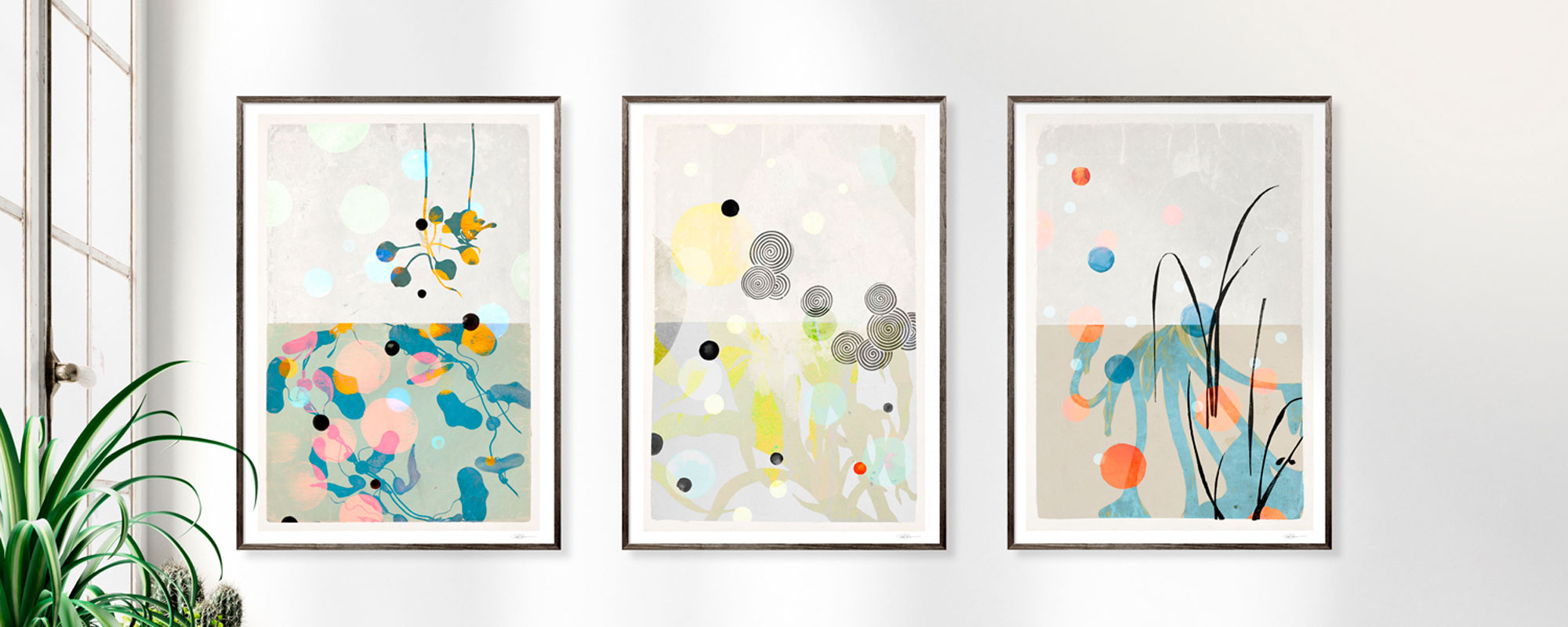
Guide to Art in Hospitality Design
A hospitality space is remembered long before the guest can articulate why. It happens in the light over the reception, in the texture of the countertop, in the acoustics between conversations – and in the art on the walls. A strong guide to art in hospitality design therefore begins not with decoration, but with atmosphere. Art is not the final layer. It helps define how a place feels, and whether the experience becomes generic or unforgettable.
In hotels, restaurants, lounges, and boutique spaces, the role of art is more complex than in private homes. It must create identity without being obtrusive. It must be characterful enough to be noticed, yet harmonious enough to function in a space with operations, movement, and many different guests. Good hospitality art is never just pretty. It is site-specific, consciously curated, and clearly anchored in the brand's pace, tone, and tactility.
What art does in hospitality design
When art works in hospitality design, it creates more than visual filler. It shapes behavior. A calm, poetic piece in subdued tones can make a lobby feel more exclusive and less transactional. A series with strong rhythm and graphic clarity can give a restaurant an edge and energy. Art can also create small pauses in an environment otherwise full of input. It gives the eye a place to land.
This is precisely why art should be considered early in the design process. If works are only chosen at the end, they are often reduced to color matching or wall filler. The result is rarely convincing. The most cohesive hospitality environments use art as an integrated part of the space's narrative - on par with material choices, furnishings, light, and sound.
There's also a commercial dimension. Guests share spaces that have visual character. They return to places that feel well-thought-out. Art contributes to the kind of identity you feel immediately but only understand afterwards.
Guide to art in hospitality design with the right curation
Curation is not about choosing the most expensive works or the most eye-catching motifs. It's about precision. What mood should greet the guest upon arrival? Where should energy be elevated, and where should it be subdued? Should the space feel intimate, urban, ceremonial, or light?
A boutique hotel can sustain a more layered and personal art profile than a large chain with many touchpoints and high traffic. A wine bar can tolerate a darker, more sensual visual tone than a daylight-filled café concept. A spa environment often requires works with visual calm and tactile depth, while a creative coworking hotel might benefit from more graphic tension.
The key is coherence. If the interior is sleek, monochrome, and architectural, the art can either continue that discipline or consciously soften it. Both strategies work - but only if chosen intentionally. Random variation is quickly read as uncertainty.
A curated series often functions more powerfully than standalone works without mutual relation. Series create rhythm through corridors, zones, and transitions. They give the guest a sense that someone has conceived the entire place as a composition, not as a collection of disjointed decisions.
Original works, limited editions, or art prints?
The right choice depends on budget, operation, and ambition. Original works add a special aura. They possess presence, materiality, and often the kind of imperfect precision that only handcrafted work can create. In signature spaces – reception, private dining, suite areas, or the chef's table – original art can significantly elevate the experience.
Limited editions are a strong intermediary. They retain the sense of exclusivity and artistic integrity, but make it easier to work with coherence across multiple rooms. They are particularly suitable when a hospitality concept desires a consistent visual language without becoming reproduction-heavy.
High-quality fine art prints have their own justification if produced uncompromisingly. Giclée on exclusive paper or canvas with tactile color depth and precise pigmentation can appear convincing in hospitality contexts, especially when motif, framing, and placement are well-thought-out. The crucial point is that the work does not feel like a standard solution.
Scale, placement, and rhythm in the space
Many hospitality projects fail on scale. Art is chosen too small, hung too high, or placed without relation to furnishings and lines of movement. In large rooms, art requires volume - either in format or in compositional weight. A small work can be exquisite, but it quickly gets lost in a lobby with high ceilings and generous material surfaces.
Conversely, large works are not always the answer. In more intimate zones, a smaller series with high tactility can create greater refinement than one dominant statement piece. In restaurants, it's often worth thinking in sequences: what greets the guest at the entrance, on the way to the table, from a seated position, and when transitioning to the bar or lounge?
Placement should also consider light. Direct sun, spotlights with too harsh a temperature, or uneven lighting can flatten a work. Art in hospitality should not just be seen - it should be staged. This applies especially to works with tactile layers, gold leaf, brushstrokes, or collage elements, where light can emphasize their sensual depth.
Materials matter more than many think
In hospitality design, materiality quickly becomes apparent because guests experience the space physically and up close. Therefore, the materials of the art should speak to the other surfaces of the interior. A room with natural stone, smoked oak, and brushed metal calls for a different artistic materiality than an environment characterized by high gloss, glass, and sharp graphics.
Paper works behind anti-reflective glass provide a sophisticated, calm finish. Canvas can add warmth and softer depth. Hand-finished details such as gold leaf or textural layers can create discreet luxury if used with restraint. Too much effect quickly makes the experience more decorative than precise.
There are also practical considerations. In restaurant environments, framing must withstand activity, temperature fluctuations, and cleaning. In hotel corridors, durability and secure mounting are crucial. Premium doesn't mean fragile. It means that aesthetics and function are conceived as a single solution.
How to avoid generic hotel art
Generic hotel art often arises when art is chosen based on the path of least resistance. It must not offend anyone, not draw attention, not demand a stance. The result is often images that no one remembers. They fill a surface, but they do not add identity.
The stronger path is not necessarily provocation. It is precision. Choose works with a clear visual language, a tactile quality, and an emotional temperature that suits the place. A calm work may be quiet, as long as it is not anonymous. A graphic work may be striking, as long as it does not compete with the entire room.
It takes courage to curate with character, but that is precisely where hospitality branding becomes convincing. Guests notice the difference between art bought to fill a space and art chosen to tell a story.
Art as brand narrative, not just decoration
The most memorable hospitality environments understand that art can convey brand values without becoming illustrative. A place that wants to feel poetic and grounded doesn't need pictures of nature. Instead, it can work with organic compositions, mineral tones, and materials with calm weight. An urban concept doesn't need raw street references if the energy can be conveyed through rhythm, contrast, and sharp curation.
Here, art becomes a language. Not slogan-based, but sensual. It says something about the place's pace, sophistication, and ambition. For a brand with high aesthetic integrity, it is often better to choose fewer, stronger works than many mediocre ones. Space around the art signals confidence.
If working with an art partner or studio, it is worth prioritizing someone who understands both the artistic process and the demands of a hospitality space. The best solution is rarely catalog thinking. It arises in dialogue between architecture, operation, guest experience, and a curatorial eye. With brands that have an atelier-based practice and uncompromising material understanding, that dialogue can become far more precise - and far more sensual.
A well-executed hospitality space never feels over-explained. You simply feel that everything connects. When art hits the mark, it doesn't become an addition to the space. It becomes part of its pulse. That's where the guest pauses a moment longer, looks again, and carries the atmosphere with them.