Art from archive motifs with lasting depth
A faded photograph, a cut-out botanical plate, a piece of typography from a forgotten publication – art from archival motifs rarely begins with anything flashy. It starts with traces. With surfaces, time, and visual remnants that already carry a narrative, long before the work takes its final form.
This is precisely why archive-based works hold a particular appeal for collectors and design-conscious decorators. They speak softly, yet with authority. Where much wall art strives for attention, archival motifs often bring the opposite – calm, depth, and a sense of cultural weight, without making the space feel heavy.
What characterizes art from archival motifs?
Art from archival motifs is not the same as simple reproduction. An archival motif can be a historical photograph, a graphic fragment, an illustration, a scientific plate, or printed material with patina and traces of time. But the interesting part only arises when the material is transformed.
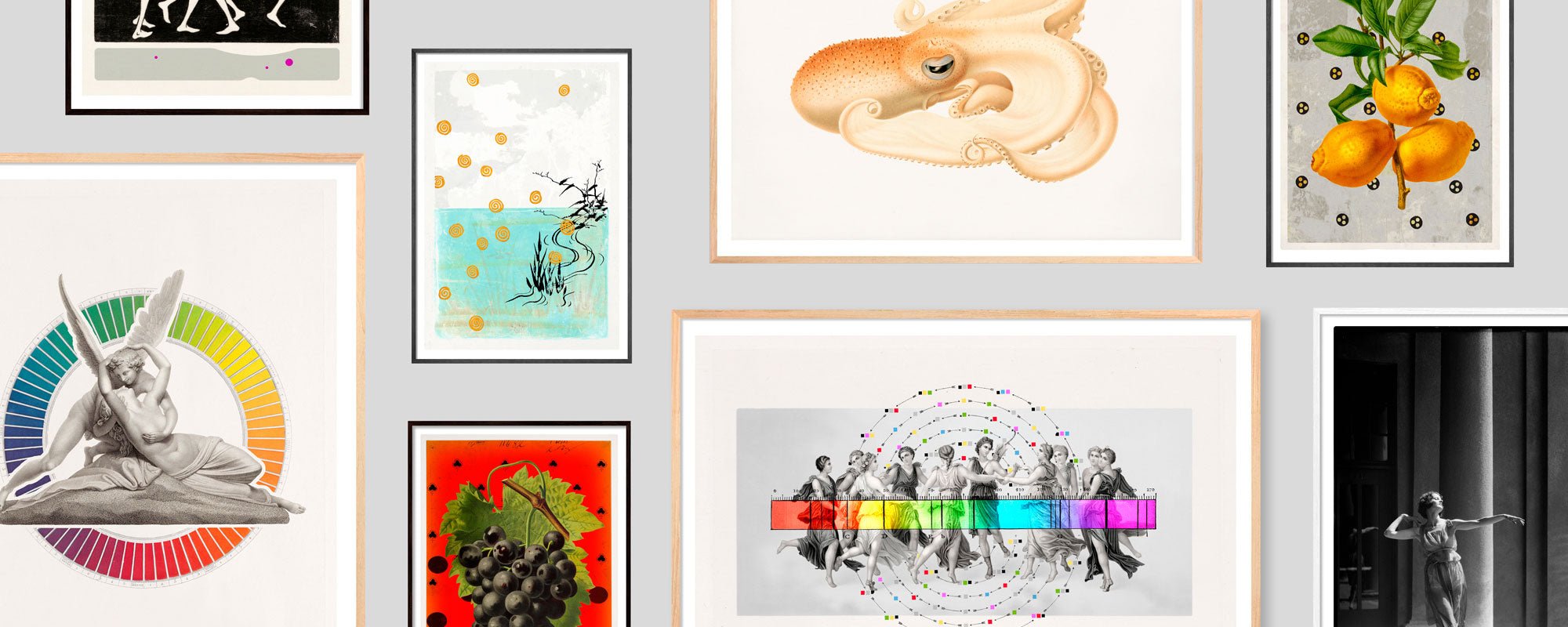
This is where artistic integrity reveals itself. The motif is cropped, shifted, layered, enlarged, or placed in dialogue with color fields, collage, hand-drawn elements, or refined surfaces. The result is not nostalgia for nostalgia's sake. It is a new composition where the materiality of the past meets a contemporary gaze.
For the quality-conscious buyer, the value often lies in the tension between recognition and renewal. One senses that the image lived a life before this work, but one also sees that it has been elevated, curated, and composed with precision.
Why archival motifs feel more alive than decorative wall adornments
Many rooms are decorated with pictures that are nice enough but quickly forgotten. They match the sofa but not necessarily the person living there. Archive-based art works differently because it rarely appears generic.
Patina plays a central role. Small imperfections, grain, wear, slight discolorations, and printed traces create a visual complexity that the eye keeps returning to. It is a slower aesthetic. Not loud, but rich.
At the same time, archival motifs contain an inherent cultural resonance. An old map, a botanical study, or an anonymous portrait can infuse a room with a sense of memory and continuity. Not as a museum effect, but as an atmosphere. This makes particularly good sense in homes, offices, and hospitality environments where character is desired over standardized styling.
There is also an emotional dimension. Archival material feels human. It bears traces of hands, printing processes, the ravages of time, and past contexts. When transformed into art, a discreet intensity emerges that purely digital motifs rarely can convincingly replicate.
From source to work - the visual transformation
At StoltzeStudio, this transformation is a central part of the artistic process. Historical photographs, graphic fragments, and rare archival finds are not merely reproduced but carefully curated, restored, and visually refined so that the material's original character is preserved while the work gains new relevance in a modern context. Through digital and hand-refined techniques, the studio works with cropping, tonal adjustments, layering, and material translation that highlight the materiality and patina of the archival material without erasing its history. The result is artworks where the visual traces of the past are transformed into timeless compositions with calm, depth, and architectural presence.
The big difference between a find and a finished work of art lies in the processing. A strong work is created not only by the original material but by the way it is interpreted.
Some compositions work with minimal intervention. Here, a single archival motif is allowed to stand almost pure, but in a new scale, with refined color adjustment and a more precise image surface. Other works take a more radical approach and build poetic compositions of several elements, where photography, texture, and abstract layers merge.
Both approaches can be convincing. It depends on what the work needs to achieve. If the ambition is stillness and architectural calm, the more restrained treatment often works best. If the room calls for edge, narrative, or a more striking artistic gesture, collage and visual displacement can create greater presence.
This is precisely where uncompromisingness matters. Archival art works strongest when the transformation is conscious enough to create something new, but respectful enough to preserve the material's soul.
Art from archival motifs in modern interior design
There's a reason this type of work fits so well into contemporary interiors. Archival motifs speak beautifully with natural materials, muted palettes, and tactile surfaces like wood, stone, wool, brushed metal, and linen. They add a sense of layering to a room without visual clutter.
In a private home, an archive-based work can create balance in the living room, especially if the rest of the decor is stark and architectural. In the bedroom, the quieter motifs can serve as a sensory refuge – something you never tire of looking at. In offices and creative workspaces, they can add substance without disturbing concentration.
If the work is to be used in hospitality, receptions, or meeting rooms, materiality and format become even more important. Here, art should have enough depth to be appreciated from a distance but also reward close inspection. Archive-based compositions offer something special in this context because they appear both sophisticated and human.
This does not mean that art from archival motifs fits everywhere. In very color-saturated or strongly graphic rooms, a delicate, historical motif can lose its tension. Conversely, an overly dramatic collage work can seem too insistent in a room seeking calm. It's about the relationship between the work, its scale, and its surroundings.
Materials and finish make the difference
When the motif relies on fine details, the reproduction quality is crucial. Grain, paper traces, subtle tonal transitions, and textural nuances quickly disappear in mediocre print production. Therefore, the choice of paper, pigments, and printing method matters far more here than for simpler, flat motifs.
Giclée prints on exclusive papers are often an obvious choice because color depth and precision preserve the delicate surfaces. Canvas can add a more painterly weight, but it depends on the character of the motif. Some archival works benefit from the soft tactility, while others appear sharpest on paper, where details get space and definition.
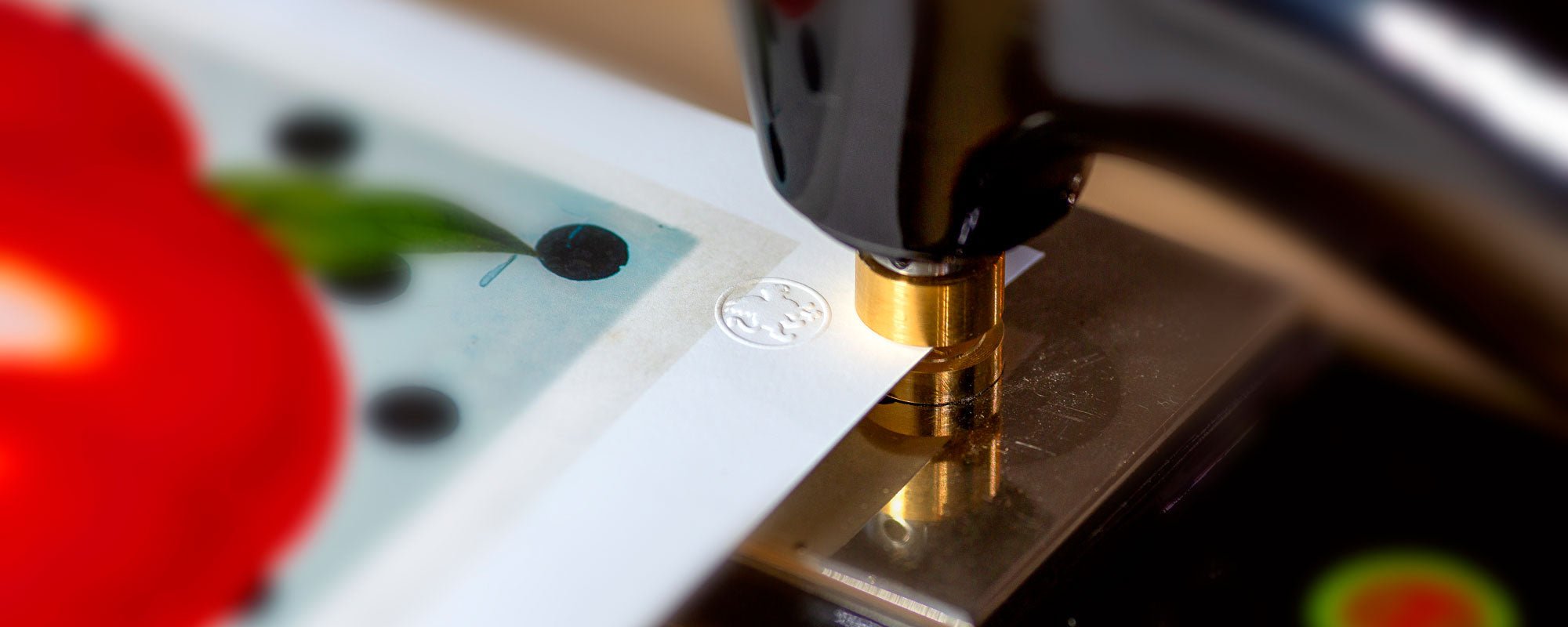
Hand-finished details can further elevate the work if used with discipline. A discreet layer of gold leaf or a worked surface can create tension between the historical and the exclusive. But here a clear caveat applies: embellishment must never become an effect that overpowers the motif's own dignity.
Limited editions also add another form of value. Not just in a collector's sense, but because the edition logic emphasizes that the work is curated and produced with care rather than mass-produced volume.
How to choose the right archive-based artwork?
The best choice rarely begins with the color of the wall. It begins with the mood. The question is not just what fits in, but what the room lacks.
If a room feels too sleek or impersonal, a piece with clear patina and historical texture can add character. If a room already contains many objects, a simpler archival motif can create the necessary visual pause. For larger walls, it often makes sense to choose a motif with clear structure and depth, so the work doesn't flatten out from a distance.
One should also consider what kind of narrative one desires. Botanical motifs often appear calm and contemplative. Photographic archival fragments can feel more human or melancholic. Typographic or cartographic elements add graphic rigor and intellectual character.
It also depends on temperament. Some buyers want a work that immediately feels harmonious. Others prefer something that continues to unfold over time. Archival art can do both, but rarely in the same work.
In a studio-anchored universe like StoltzeStudio, the strength is precisely that the curation is not just about the beauty of the motif, but about the whole – the material, the format, the finish, and how the work will live in a space.
Why archival art lasts longer
Trends change quickly, especially in the part of the market where wall art primarily functions as decorative accessories. Archive-based works often have greater longevity because they do not rely on a fleeting expression alone. They already carry a time horizon within them.
This does not make them immune to fashion. Archival aesthetics can also become trendy and overused. But when the work is created with discipline, quality, and genuine artistic processing, it gains a different resilience. It can move from one home to another and still feel relevant.
Perhaps this is precisely the most convincing quality of art from archival motifs. It doesn't try to be new at any cost. It dares to be complex, quiet, and saturated with time. In a visual climate characterized by fleeting images, this is not just aesthetically appealing. It is a quality one can live with for a long time.