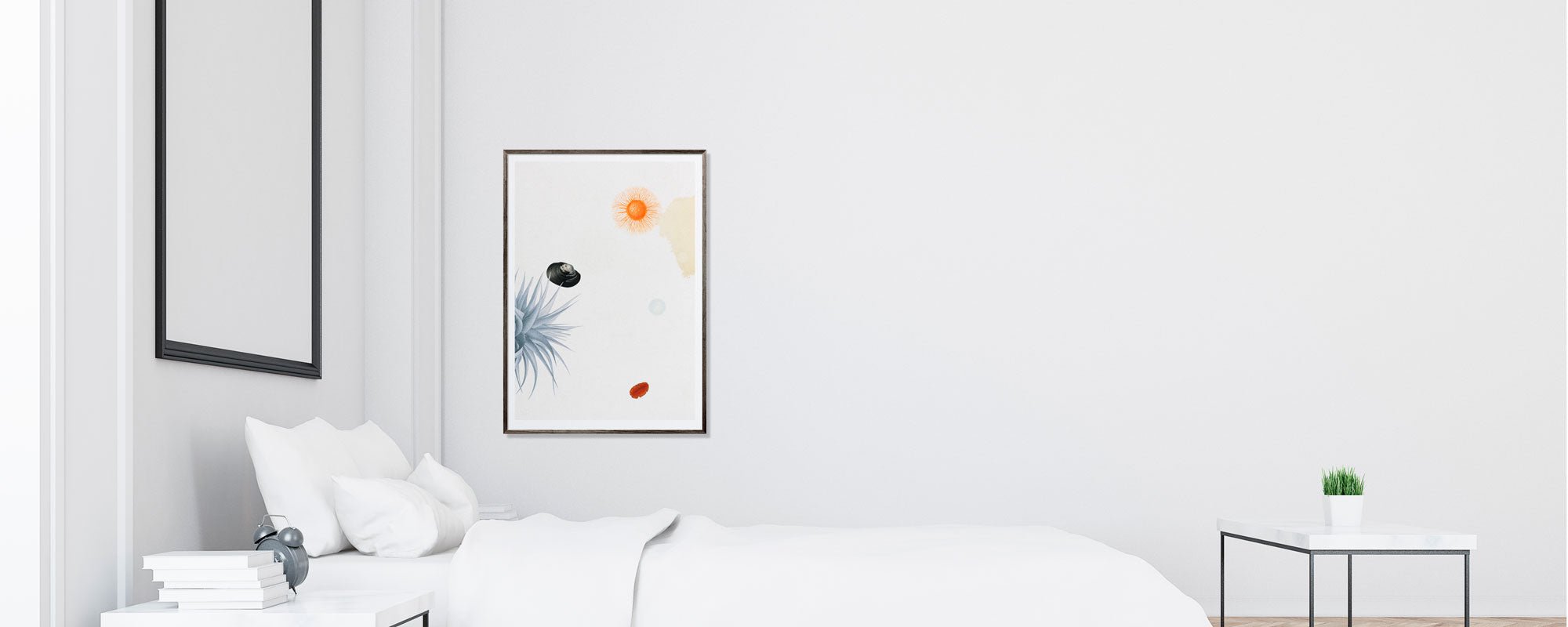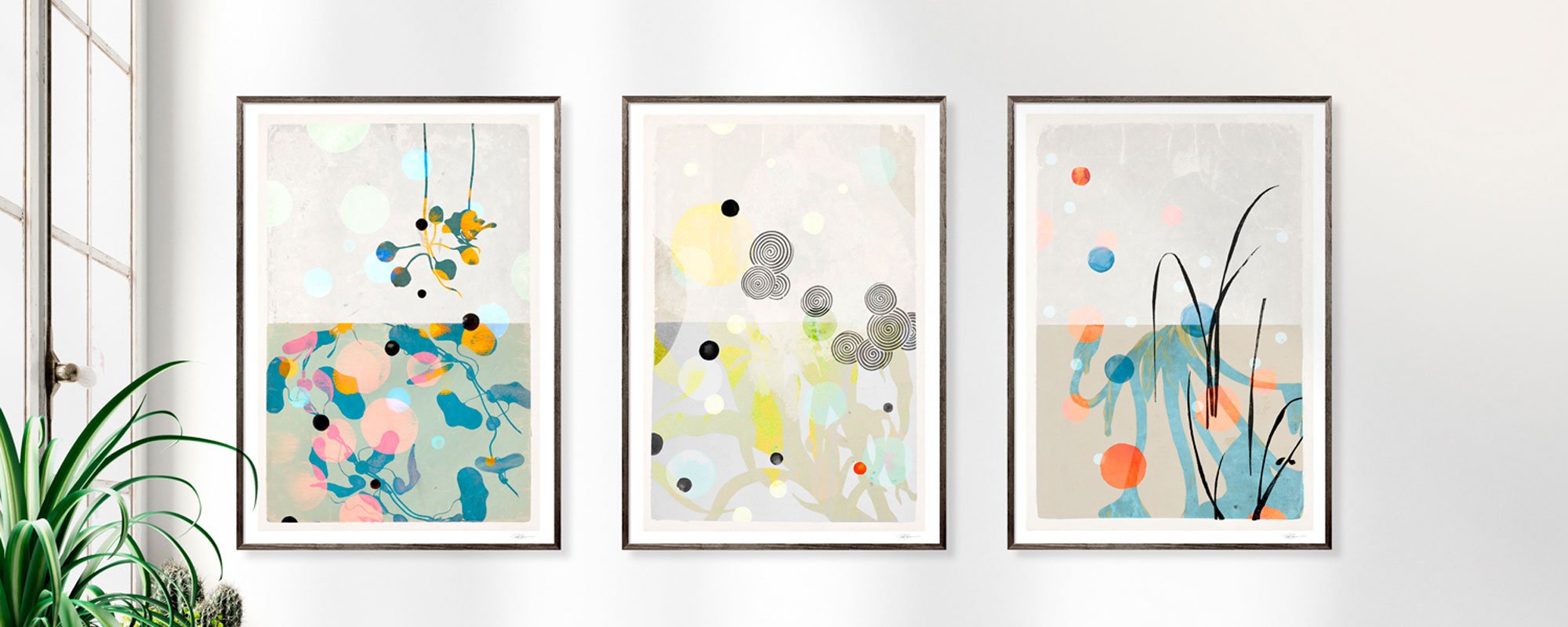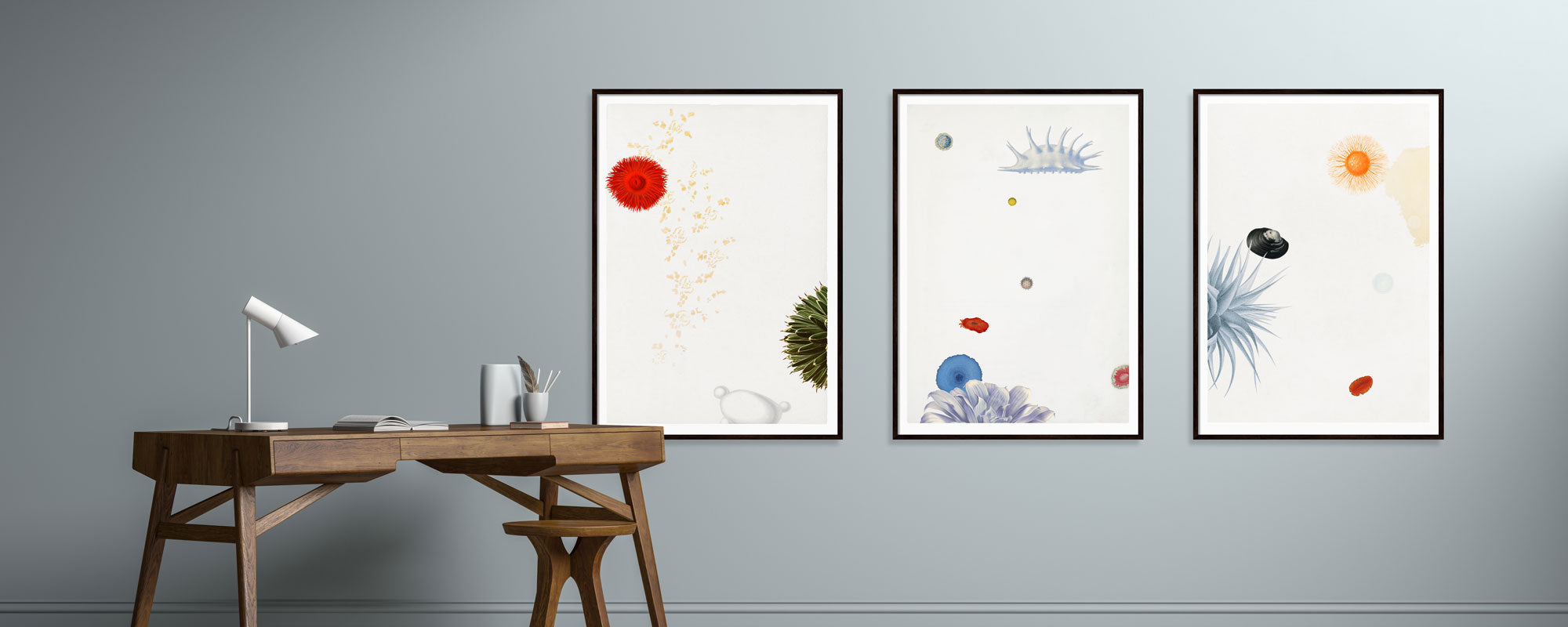
Personal curation of artworks at home
A room quickly reveals whether the art has been chosen with intention or merely hung to fill a wall. You feel the difference immediately. Personal curation of artworks is precisely about this difference – about creating a composition where the works are not just beautiful individually, but speak precisely to the architecture, light, materials, and the atmosphere you wish to live in.
When curation becomes personal, the focus shifts from trend to presence. It's not a matter of buying the most striking motif or the largest format. It's a matter of rhythm, balance, and character. A home with artistic integrity rarely feels overdecorated. It feels deliberate.
What personal curation of artworks actually means
Many associate curation with galleries and museums, but in private spaces, curation is at least as essential. Here, it's not about impressing an audience, but about shaping everyday life with visual depth. This requires a keen eye for the connection between the artwork and the life unfolding around it.
Personal curation of artworks is therefore not just selection. It is a discipline where motif, scale, color temperature, paper, framing, and placement are read as parts of the same composition. A poetic collage on exclusive paper can create silence in a room with hard surfaces. A hand-finished work with gold leaf can add warmth and reflection to a more subdued interior. A limited edition print can evoke a sense of concentrated presence because one knows that the work was created with a different degree of care and delimitation.
The personal arises not only in the motif. It arises in the precision with which the work meets the room.
Why standard solutions rarely create strong rooms
Mass-produced wall art has one clear advantage – it's easy. But precisely that ease often becomes its weakness. When everything is made generic, the room loses its edge. Colors are chosen to suit everyone. Motifs are created not to challenge anyone. The result is pleasant, but rarely memorable.
Curated works operate in opposition. They dare to have an opinion. They are allowed to add tension, silence, texture, or an almost literary undertone. This is especially important in homes and workspaces, where aesthetics are not just decoration, but part of how one thinks and lives.
This does not mean that personal curation always has to be dramatic. On the contrary. Often, strength lies in subtlety. A muted series with archival motifs or visual transformations can create more lasting beauty than a single work that shouts loudly. It depends on the room, the daylight, and the temperament of those who will live with the art.
How to read a room before choosing art
The first question is rarely what color the art should be. The first question is what the room lacks. Some rooms lack gravitas. Others lack tranquility. Some lack a unifying axis, while others need a more unexpected element to break up what is too orderly.
A living room with soft textiles, warm wood, and low lighting can support works with greater materiality and deeper tones. A more architectural space with stone, glass, and steel can benefit from compositions that soften the lines or introduce a more tactile surface. Here, the choice of material becomes crucial. Giclée prints on exclusive paper have a special depth and finesse in color reproduction, while canvas can add a more painterly weight.
Scale is as important as the motif. Works that are too small on a large wall often appear hesitant. Works that are too large in a compact room can feel intrusive. The right size not only creates proportion. It creates peace for the eye.
Personal curation of artworks requires an eye for materials
In the premium segment, it's not enough for a work to look good on a screen. The materiality must be felt. The weight of the paper, the depth of the print, the matte or vibrant character of the surface, and any hand-finished details are not secondary choices. They are part of the work's voice.
A motif can change character significantly depending on its production. On standard paper, it can appear flat and rushed. On museum-quality paper, it gains space, nuances, and weight. If hand-applied details like gold leaf are added, a different kind of presence emerges – not ostentatious, but refined. Light moves across the work throughout the day, providing a sensory variation that digital images can never fully replicate.
This is where personal curation becomes more than taste. It becomes expertise. Choosing correctly is not just about loving a motif, but about understanding how it will physically live in the space over time.
Single work or series – it depends on the room's tempo
Some homes call for one definitive work. A single large piece above a sofa, in an entrance hall, or at the end of a long sightline can act as a visual anchor. It creates direction and gives the room a clear identity.
Other rooms benefit more from a series. This is especially true in places where rhythm is desired over monumentality. A group of works with related tones or motifs can create a more literary atmosphere, almost like pages from the same story. Here, the distance between frames, the linear flow, and the relationship between formats become crucial. A good salon hang never appears accidental, even when it looks effortless.
There is no universal rule for what is most sophisticated. A single work can appear majestic. A series can feel more intimate and cultivated. It depends on the room's tempo and whether you want focus or continuous visual exploration.
When art should suit you – not just your sofa
Color matching has become a habit in modern interior design, but art should not be reduced to textile coordination. The best curation starts with the person before the palette. What attracts you again and again? Which images continue to grip you? Do you prefer quiet compositions, graphic tension, archive-based motifs, or works with more organic movement?
It is often here that the most interesting choices arise. A work does not have to repeat the room's colors to belong there. On the contrary, it can be precisely that shift that makes the interior vibrant. A cool wall can support warm tones. A very harmonious room can benefit from a more tactile or unsettling work. Personality rarely arises through full control. It arises through precise contrasts.
For clients who want a more elaborate expression, it can make sense to think holistically across several rooms. Not as a strict concept, but as a discreet common thread. Perhaps a tone, a type of composition, or a certain materiality is repeated. This makes the home feel curated rather than styled.
The physical experience makes a difference
Art is often chosen online, and this can work excellently, especially when the presentation is well thought out. But some works need to be experienced up close to be truly understood. Surfaces, depth, paper quality, and artisanal details truly reveal themselves only in a physical encounter.
Therefore, an atelier or studio visit can have real value, not as luxury for luxury's sake, but as part of the decision-making process. In a sensory sanctuary, where works, materials, and atmosphere are given space, it becomes easier to feel what you genuinely want to live with. At StoltzeStudio, this dimension is central – the meeting between gallery, atelier, and calm café culture creates a different kind of intimacy around the artwork.
For some, this will be crucial. For others, qualified sparring on format, finish, and placement is enough. Both can lead to strong choices if the curation is precise.
The slow value of a well-chosen work
There is art that you quickly finish looking at. And then there are works that continue to reveal themselves. These are often the ones chosen with greater care. Not necessarily the most expensive, but the most right.
Personal curation of artworks precisely creates this slow value. It gives the home a deeper resonance because the works are chosen with an eye for both aesthetics and a sense of life. When art is allowed to be more than decoration, it becomes part of the room's pulse – a quiet, continuous presence that sharpens the eye and enriches everyday life.
If you choose slowly, you often choose better. And the best works are rarely those that fit in immediately, but those that stay with you long after the rest of the room has settled.